跨境独立站开店
The Importance of Inventory Management in the Wholesale Industry and Systems
This article explains the importance of inventory management in the wholesale industry and recommends suitable systems. We'll cover key points for efficiency and the challenges faced by wholesalers to help you achieve stable inventory management.







This article explains the importance of inventory management in the wholesale industry and recommends suitable systems for wholesale businesses.
Wholesalers need to adjust their inventory based on when and how much they expect to receive orders from retailers, requiring thorough maintenance and management. While inventory management in the wholesale industry can be complex due to the large volume of goods involved, proper implementation can yield many benefits, such as cost reduction and improved operational efficiency.
This article explains the importance of inventory management in the wholesale industry, as well as inventory management systems that can lead to improved operational efficiency and cost reduction. By understanding the key points for efficiency and the challenges unique to the wholesale industry, you can achieve stable inventory management.
What is inventory management in the wholesale industry?
Inventory management in the wholesale industry involves managing inventory in appropriate quantities and conditions based on order status and sales data. It involves predicting how much inventory should be held, adjusting quantities accordingly, and maintaining appropriate inventory levels through inventory counts and receiving/shipping management to ensure that customers receive the necessary goods in the required quantities and in a timely manner. Inventory management is particularly crucial in the wholesale industry, where the variety and volume of goods handled are extensive.
The Importance of Inventory Management in the Wholesale Industry
In the wholesale industry, inventory management is crucial from the perspectives of preventing a decline in product value due to excess inventory, avoiding lost sales opportunities due to insufficient inventory, and reducing stock costs. If inventory is too high, costs related to inventory management, such as storage costs and labor costs, will increase, as will the risk of deterioration and disposal. Conversely, if inventory is too low, it may be impossible to provide customers with the necessary quantity when they need it, potentially leading to decreased customer satisfaction.
Proper inventory management and maintaining smooth product distribution lead to stable business operations.
Benefits of inventory management in the wholesale industry
- Improved Cash Flow: Holding inventory means that cash is converted into goods, resulting in less available funds. Therefore, by managing inventory with an awareness of "optimal inventory"—maintaining the necessary quantity while avoiding unnecessary stock—you can improve cash flow.
- Data can be used to forecast demand: With proper inventory management in place, accumulated historical inventory data can be used to forecast demand. Analyzing this data along with market trends can improve forecast accuracy and ensure adequate inventory is available even during peak seasons.
- Improved customer satisfaction: Maintaining appropriate inventory levels ensures that orders are processed accurately and on time, preventing customers from switching to competitors due to stockouts or insufficient inventory. Providing products as ordered builds customer trust, leading to repeat business and the development of long-term customer relationships.
- Cost Reduction: Maintaining appropriate inventory levels minimizes the costs associated with excess inventory, such as warehouse maintenance and labor costs for management. By controlling excess inventory, you can reallocate the budget to other operations by using the space for other purposes or canceling warehouse leases.
Challenges in inventory management for wholesalers
- Large-scale inventory management
- Demand forecast
- Maintaining appropriate inventory levels
- Integration with different systems
In wholesale businesses with a large number of products and high quantities, managing inventory becomes difficult when goods are stored at multiple locations or when large orders are received. This can lead to problems such as loss, shipping delays, and data errors. To prevent such mistakes, it is recommended to implement an inventory management system that can handle multiple locations. It allows you to track all inventory levels, including warehouses and stores, in real time, making it easy to manage inventory across multiple locations and process large orders.
In the wholesale industry, demand fluctuates due to weather, seasons, events, and market trends, making it often difficult to predict the necessary inventory levels. To improve the accuracy of demand forecasting, proper inventory management is required, such as using an inventory management system to track the inflow and outflow of goods in real time and conducting regular inventory counts. It is also important to take measures to prevent stockouts and shortages, such as setting reorder points in the system and automatically placing orders when inventory levels fall to those points.
In the wholesale business, it's necessary to adjust orders to avoid excess inventory while maintaining sufficient stock to handle large orders. Excess inventory can increase maintenance costs and potentially diminish product value due to a decline in quality. However, having too little inventory means you may not be able to meet customer expectations when a large order comes in, potentially causing customers to switch to competitors.
By prioritizing the replenishment of high-turnover, essential products and procuring only what is needed, when it is needed, and in the required quantities, the Just-In-Time (JIT) system, tailored to your company's specific circumstances, can be used to minimize inventory and improve efficiency, thereby maintaining optimal inventory levels and reducing costs associated with excess inventory.
If you are already using systems for accounting, sales management, etc., and are considering introducing a new system, you need to consider compatibility with the systems you are currently using. If the systems cannot be linked, you will have to enter data into each system separately, which can lead to wasted time, input errors, and discrepancies in ordering and receiving orders because you will not be able to accurately track inventory levels in real time. When choosing a system, make sure to check in advance whether it can be linked with your existing systems so that you can manage everything centrally.
Recommended inventory management systems for wholesale businesses
- Shopify
- Cammax
1. Shopify
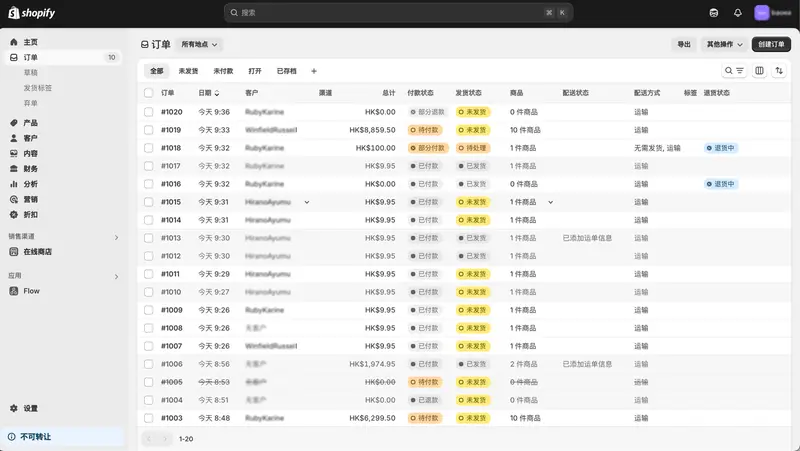
Shopify is an e-commerce platform that makes it easy to set up an online store and includes inventory management features. When integrating with other systems, data synchronization and centralized operations can be easily achieved using the integration features.
It comes with the following standard features:
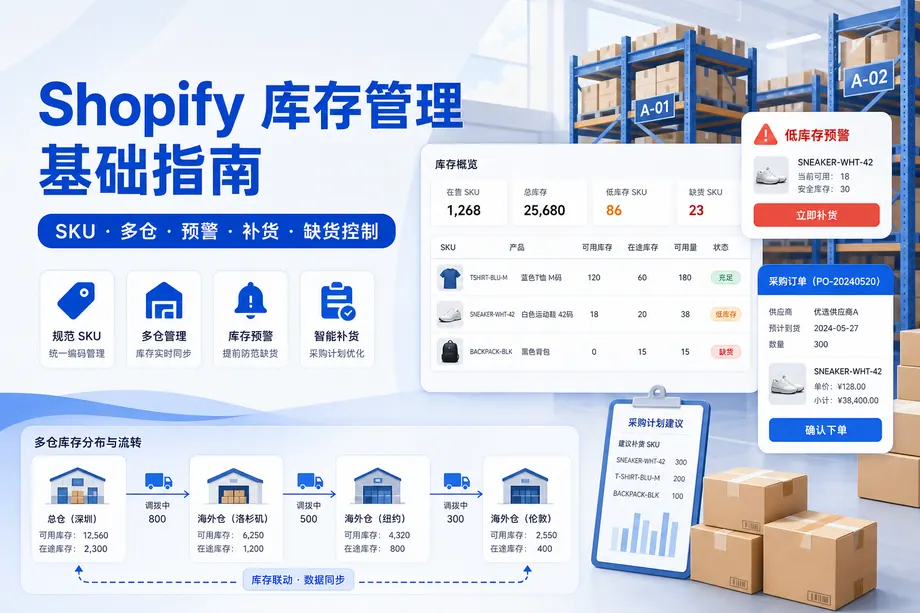
- Real-time inventory tracking across all sales channels.
- Multiple warehouse management function
- Report creation
For wholesale businesses, Shopify Plus is recommended as it allows you to set up a B2B e-commerce site. Both consumer-facing and wholesale sales can be managed on a single platform. The advantages of Shopify Plus are as follows:
- Customer-specific pricing, minimum order quantities, and payment terms can be set.
- Powerful server
- Extensive API integration
- Support from dedicated staff
Pricing: Shopify Plus is 368,000 yen per month with a 3-year contract.
2. Rakusho
Rakushō is a sales and inventory management system specifically designed for small and medium-sized enterprises in Japan, and is adaptable to a variety of industries. In the wholesale industry, the following operational efficiencies can be expected:
- All operations, from order taking, sales, purchasing, inventory management, invoicing, and payment collection, are integrated into one system.
- Individual conditions (prices, unit price systems, delivery conditions, pricing, etc.) can be registered and managed for each customer and supplier.
- Inventory status, including stock levels, backlog of orders, backlog of orders, and optimal stock levels, can be checked in real time.
We can also accommodate various company-specific needs, such as lot management, CRM, and import-related processing, through optional services.
Pricing: On-premise version: 3,500,000 yen (5-year license and associated costs included), Cloud version: 30,000 yen per month (basic support included).
3. Cammax
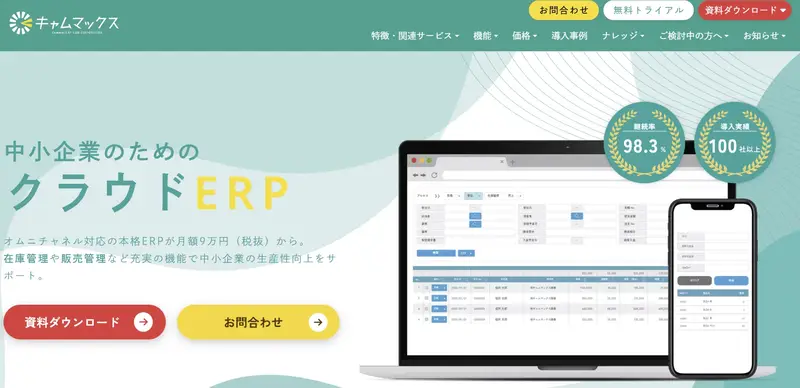
Cammax is a core system designed for small and medium-sized enterprises. It allows for centralized management of a wide range of business operations, from order processing to financial accounting. Its main functions are as follows:
- Centralized management of a wide range of operations, including sales management, production site management, inventory and warehouse management, purchasing management, and financial accounting.
- Real-time inventory inquiry including multiple locations and inventory in transit.
- The set product can be assembled and disassembled freely.
Price: From 90,000 yen per month
Things to check when choosing an inventory management system
- Is it appropriate for the scale and nature of the business?
- Can inventory be tracked in real time?
- Is it easy to integrate with other tools?
- Can you forecast and analyze demand?
- Is the price appropriate?
- Does it have B2B functionality?
Choosing an inventory management system that suits your business size and operations will help you achieve the desired results. There are various types of inventory management systems, from those for small and medium-sized enterprises to those for large corporations and international supply chains with multiple warehouses. Consider the following points to select an inventory management system that is right for your company:
- Number of stores and warehouses
- Number of items sold
- The existence of business partners who take advantage of special pricing
For wholesale businesses, it's crucial to choose an inventory management system that can instantly and accurately reflect sales and inventory levels across all sales channels. For example, features such as the following can enable efficient inventory management:
- Sales data from all channels can be automatically synchronized in real time.
- Products can be automatically reordered when inventory drops to the reorder point.
- Accounting and sales data can be updated in real time.
For wholesale businesses, a crucial factor in inventory management systems is their ability to easily integrate with existing systems, such as accounting software. A system that integrates easily allows for immediate use after implementation. Consider the following conditions:
- Is it easy to integrate with our existing systems?
- Is API integration available?
- Is it compatible with EDI (Electronic Data Interchange)?
Choose a system that allows you to manage inventory data while simultaneously forecasting demand. A system like the following would be a good choice:
- Analysis based on past sales performance and season is possible.
- You can create custom reports on sales trends, inventory turnover, and profit margins.
- Data is easily accessible and can be analyzed.
You should also consider whether the pricing fits your current budget and future plans. Here are some key points to check:
- Will the pricing structure vary depending on the number of users, orders, locations, etc.?
- Are there any initial or setup fees?
- Are there any additional costs beyond the system itself, such as integration with other tools or additional options?
- Is it possible to change plans or expand features as the company grows?
It is important to choose a system that meets current business needs while also being flexible enough to accommodate future business expansion and operational changes.
With the increasing demand for online transactions in the B2B sector, you should utilize a B2B e-commerce platform. A system with the following features is recommended:
- Customers can view and order products from their My Page.
- Different pricing and discount conditions can be applied to each customer.
- You can personalize catalogs and recommendations.
- Access can be restricted to specific customers only.
8 Key Points for Achieving Proper Inventory Management in the Wholesale Business
- Avoid manual management.
- Leveraging technology
- Conduct a cyclical inventory count.
- Minimize inventory
- Set the reorder point (ROP).
- Optimize warehouse layout
- Utilizing a B2B customer portal
- We are considering outsourcing to a fulfillment service company.
1. Avoid manual management.
Avoid manual methods such as handwriting or entering data into Excel. These methods are time-consuming and prone to human errors such as incorrect data entry, making inventory management inefficient. While manual inventory management may be feasible when your business is small and just starting out, it can become overwhelming as your business expands. Ideally, you should implement an inventory management system from the start, but if this is difficult due to budget constraints or other reasons, set clear milestones, such as implementing a system once your sales target is reached, and then transition to the system once those milestones are achieved.
2. Leverage technology
Along with inventory management systems, it's also important to leverage technology and automate other business processes such as sales management. Proper inventory management enables order fulfillment and delivery according to customer preferences, improving the customer experience and leading to repeat business. Furthermore, when inventory management systems integrate with other systems and share data, the majority of human errors can be eliminated.
For example, the following types of automated systems are effective:
- Inventory management system for multiple locations
- Fulfillment System
- Automated shipping management system
- Order management system supporting multiple sales channels
- Demand forecasting and automated ordering system
3. Conduct a cyclical inventory count.
Cycle counting is an inventory management method that involves classifying products and taking inventory of a fixed number of items on a regular cycle, such as weekly or monthly. Because it is limited to specific items, it can be done with a small number of people without interrupting other operations.
ABC analysis can be used when classifying products. This method classifies products into the following three groups based on their importance, using indicators such as price and sales.
- A: This is our most important item with high sales. Let's conduct frequent inventory checks to prevent stockouts.
- B: This product contributes moderately to sales. Maintain current inventory levels and try to avoid stockouts as much as possible.
- C: Products that generate sales but contribute little to overall profit. Due to their low turnover rate and minimal impact on profits, inventory checks should only be conducted once a year. Ordering after a stockout or replacing them with other products would also be beneficial.
Since the process is divided into parts, care must be taken to avoid duplication or omissions during implementation.
4. Minimize inventory.
Holding more inventory than necessary can lead to quality deterioration due to long-term storage and losses such as storage costs, so maintain the minimum necessary quantity. The following methods are effective in reducing inventory levels.
- Using ABC analysis: Prioritize replenishing products with high turnover and sales.
- Considering small orders: Instead of placing large orders just because there are bulk discounts, determine the order quantity by considering storage costs and the risk of unsold inventory.
- Utilizing an inventory management system: We forecast demand trends, seasonal and weather conditions, and historical data to secure only the necessary amount of inventory.
5. Set the Reorder Point (ROP).
Setting a reorder point (ROP) is also effective for proper inventory management. The reorder point is the optimal inventory level at which additional orders should be placed. It is calculated as: average daily shipments × number of days from order to delivery + safety stock (minimum inventory level). By implementing "reorder point ordering," where a fixed quantity is ordered when the inventory level reaches the reorder point, the timing of orders becomes clear, ordering operations become more efficient, and inventory shortages, stockouts, and excess inventory can be prevented.
6. Optimize the warehouse layout.
Optimizing warehouse layout can improve work efficiency, storage efficiency, and safety. Furthermore, eliminating wasted space and implementing efficient layouts can reduce operating costs. Warehouse layouts primarily fall into the following categories:
- Type I: The receiving area is directly opposite the shipping area, with storage and picking areas located in between, creating a straight line from receiving to shipping. This layout is easy to implement even in small warehouses, and the advantage is that it reduces the risk of mixing up products because the receiving and shipping work areas are separated.
- U-shaped layout: The receiving and shipping processing areas are placed next to each other, while the storage and picking areas are located at the back of the warehouse. The advantage is that the receiving and shipping areas are close together, making it easier for workers to coordinate.
ABC analysis can also be used for product placement, placing high-turnover Group A products in the most easily accessible locations and Group C products further away from entrances and exits. Before making a final decision, thoroughly examine the layout by actually walking around the site, operating machinery such as forklifts, and checking whether operations can be made more efficient, whether there are any interferences with traffic flow, and whether there are any safety issues.
7. Utilize a B2B customer portal
By utilizing a B2B customer portal, customers can complete transactions online themselves, leading to improved customer satisfaction and increased operational efficiency. B2B customer portals offer the following advantages:
- Available 24 hours a day from anywhere in the world
- Product catalogs and prices can be viewed online.
- Customers can place orders and check their order history themselves through their dedicated account.
- Reducing errors through automation of administrative tasks
Choose a system that allows for centralized management of all information and is easy for customers to use.
8. Consider outsourcing to a fulfillment service company.
Wholesale businesses handle a large number of products, which can make managing various tasks beyond inventory management difficult. In such cases, consider outsourcing all post-sales operations to a fulfillment service company.
The specific duties of a fulfillment service company are as follows:
- Order management (processing of order data)
- Inventory management, product storage
- Picking, inspection
- Packaging and shipping
- Delivery arrangements
- Returns and exchanges
- Customer Support
Proper inventory management is essential for wholesale businesses to achieve stable operations. Because their business model involves handling large amounts of inventory and repeatedly receiving and shipping goods, utilizing a wholesale-specific inventory management system that allows for real-time inventory tracking is highly effective. Furthermore, automating inventory management through technology reduces maintenance costs, time loss, and human error, leading to increased operational efficiency. This increased efficiency allows for timely delivery of the necessary products to customers, contributing to repeat business, long-term customer relationships, and improved brand loyalty.
Let's deepen our knowledge of inventory management in the wholesale industry, implement stable inventory operations, and aim to become a company of choice for our customers.
FAQ
What is inventory management in the wholesale industry?
Inventory management in the wholesale industry involves managing inventory in the right quantity and condition to ensure that necessary goods are delivered to the right place at the right time, based on order status and sales data.
Why is inventory management important in the wholesale industry?
In the wholesale industry, inventory management is crucial to prevent excess or shortages and to maintain smooth product distribution. Proper inventory management reduces the costs associated with storing and disposing of excess inventory, and allows customers to receive the necessary products in the right quantities at the right time, leading to improved customer satisfaction and brand loyalty.
What inventory management system is recommended for wholesale businesses?
- Shopify Plus
Share this article
- Share on Facebook
- Share on X
- Share on LinkedIn