跨境独立站开店
Multichannel Inventory Management Guide | How to Overcome Challenges and Grow Your Business
This article explains multi-channel inventory management. It also covers how to choose a multi-channel inventory management system and recommends suitable inventory management software.



This article explains multi-channel inventory management. It also covers how to choose a multi-channel inventory management system and recommends suitable inventory management software.
In today's world, where sales channels are diversifying beyond e-commerce sites to include brick-and-mortar stores, marketplaces, and social media, inventory management is becoming increasingly complex. E-commerce businesses with multiple sales channels, in particular, often face problems such as "an order was placed on the e-commerce site, but when we checked the inventory, it was sold out" or "the item is in stock on Amazon, but it's showing as out of stock on the official website." Such inventory management problems can lead to lost sales opportunities and a decline in customer trust, so they need to be resolved as quickly as possible.
Efficient inventory management avoids increased costs due to excess inventory and stockouts, and also leads to a superior customer experience. To efficiently process orders from multiple channels, it is essential to have an accurate understanding of "where" and "how much" inventory is available, and to have a system in place to automatically ship products from locations closest to the customer.
This article explains the advantages and challenges of multi-channel inventory management, and introduces management methods and key points to consider when choosing an inventory management system.
What is multi-channel inventory management?
Multichannel inventory management is the process of centrally managing inventory across multiple sales channels using a single system. Common sales channels used by retailers include the following:
- Our own e-commerce site
- Amazon and Rakuten, etc.
- Shops on social media platforms such as Instagram Shopping and TikTok Shop.
By implementing multi-channel inventory management, you can synchronize inventory information across all channels in real time. Using an inventory management system, when an item is sold in one channel, the inventory levels in all other channels can be instantly and automatically updated. This prevents situations like customers ordering an item on the e-commerce site only to find it out of stock in the physical store, thus preventing lost sales opportunities and improving customer satisfaction.
Benefits of multi-channel inventory management
- Real-time synchronization allows for inventory visibility.
- Inventory forecasting can be optimized.
- Inventory can be placed in the appropriate location.
1. Real-time synchronization enables inventory visibility.
Multi-channel inventory management allows you to synchronize inventory levels across multiple locations and sales channels in real time, providing real-time inventory visibility. Constant synchronization with the latest information ensures accurate inventory management, helping to avoid stockouts and dead stock. Automating inventory management with tools not only prevents human error but also reduces the time and personnel required for management.
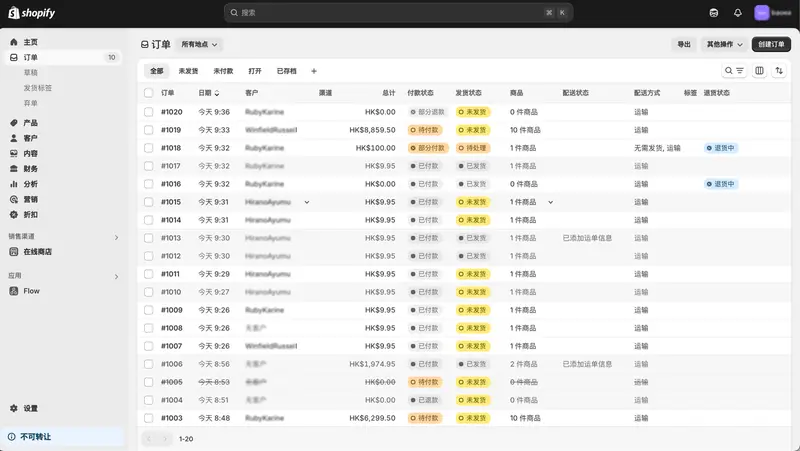
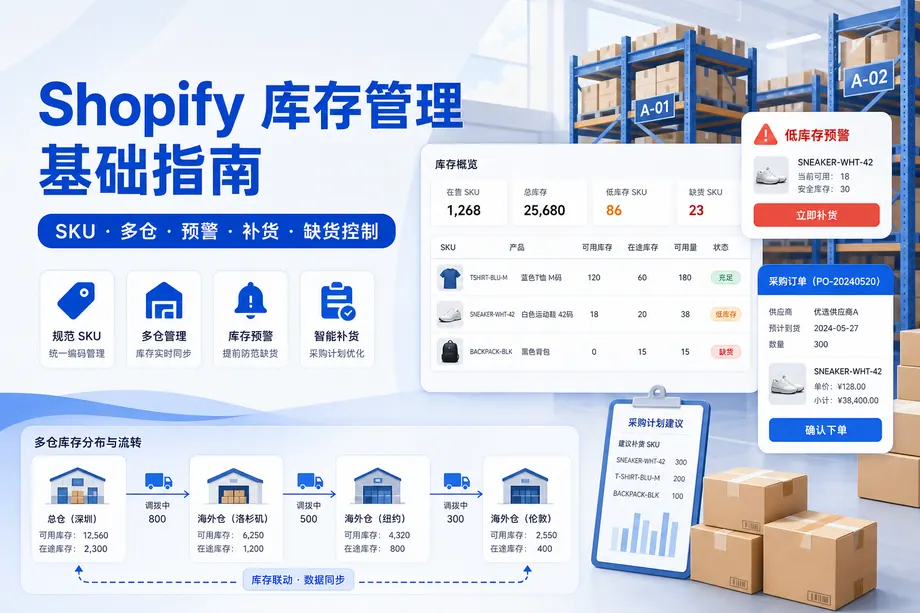
Shopify features multi-site inventory tracking, allowing you to automatically synchronize inventory levels in real time across warehouses, stores, and online channels, eliminating the need for manual adjustments. You can also set up notifications to alert you when inventory levels fall below a certain threshold, enabling you to replenish stock before it runs out.
2. Inventory forecasting can be optimized.
Accurate inventory management leads to optimized inventory forecasting. It allows for a more accurate understanding of inventory turnover, which represents the number of times products are replaced within a certain period, enabling informed decisions regarding price adjustments and restocking. High turnover rates also directly contribute to improved profit margins, as they reduce storage costs.
Furthermore, using an inventory management system makes it easier to maintain appropriate inventory levels by enabling demand forecasting that takes into account past sales data, seasonality, and marketing expenses. For example, if you sell sporting goods through multiple channels, you can strategically consider your inventory levels for the year-end sales season by analyzing the sales figures for running shoes by channel in December over the past five years.
3. Inventory can be placed in the appropriate location.
Even when operating multiple logistics centers and warehouses, implementing multi-channel inventory management enables appropriate inventory allocation based on regional demand and sales conditions. Because inventory information from all logistics centers can be centrally managed, real-time information on increases and decreases in demand in each region can be obtained. As a result, inventory from low-selling areas can be moved to high-demand locations, making it easier to maintain appropriate inventory levels at each location.
Furthermore, if each warehouse can maintain sufficient inventory to meet demand, products can be shipped from a location closer to the customer, leading to reduced transportation costs and delivery times, and ultimately, improved customer satisfaction.
How to manage inventory using a multi-channel approach
To efficiently manage inventory in multi-channel sales, using a platform designed for multi-channel sales, such as Shopify, is ideal. It allows for centralized management of not only online stores and physical stores, but also social commerce, marketplaces, and more.
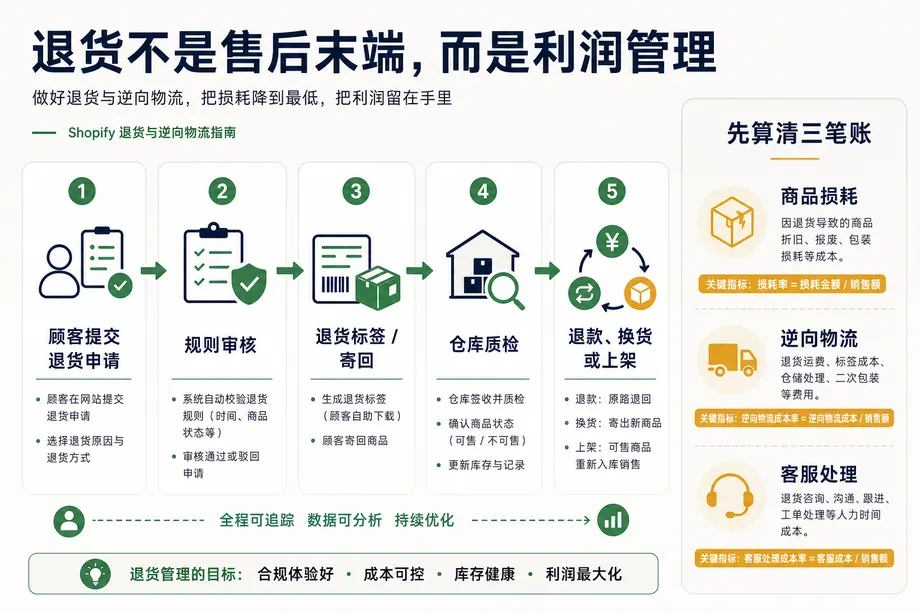
For example, when you use Shopify POS to sell in your store, inventory is automatically updated across all your connected channels, including Amazon and TikTok Shop. Even if products are returned or restocked, inventory is automatically synchronized, allowing you to stay informed in real time while avoiding human errors that can occur with manual synchronization.
Shopify offers the following inventory management features:
- Inventory display: You can see the inventory status of warehouses, retail stores, and online channels in real time.
- Inventory Alerts: By using Shopify Flow or an inventory alert app, you can set up notifications to be sent when inventory falls below a certain level, preventing stockouts.
- Inventory Placement Adjustment: You can adjust inventory placement to match demand, seasons, and trends, optimizing inventory levels across each sales channel.
Key points to consider when choosing multi-channel inventory management software.
- Inventory management function
- Barcode and scanning function
- Data Analysis
- Integration with external systems
Inventory management features should not only allow for real-time inventory tracking, but also the ability to identify patterns of stockouts. Such features allow for the identification of days and times when stockouts are more likely, enabling more efficient inventory management. Furthermore, choosing a system that automatically reorders when inventory falls below a pre-set level helps prevent lost sales opportunities due to stockouts.
Also, check if barcode inventory management is possible. Barcode and scanning functions are essential for the following types of tasks.
- Track the product
- Monitoring inventory movements
- Simplify data matching
- Create a shipping label
Data analytics features help you understand the status of your inventory across channels and overall. By analyzing inventory levels, pricing, sales data, and past purchase history, you can understand customer purchasing trends and demand. This data is a crucial element in developing appropriate inventory placement and supply chain strategies.
The ability to integrate with other business systems is also a crucial point. In particular, integration with an Order Management System (OMS) is essential when using multi-channel sales or multiple fulfillment centers.
By implementing an order management system, you can check inventory status at multiple locations, making it easier to ship products from the fulfillment center closest to the customer. Linking order information with inventory information allows for automatic updates of inventory levels across each sales channel, helping to prevent stockouts and duplicate sales.
Shopify is a platform that not only allows you to build e-commerce sites, but also centralizes product and order management, customer management, inventory management, and analytics. Because it allows you to manage these often complex aspects of a multi-channel strategy all in one place, it not only reduces the time and effort required for integration but also helps prevent manual errors.
One of the most important aspects of multi-channel inventory management software is ease of use. To ensure that management doesn't become overly complex as sales channels increase, it's crucial to choose inventory management software that focuses on the following points:
- Is the UI intuitive?
- Is it easy to implement or take over a new system?
- Can it be scaled to keep up with business growth?
Recommended Multi-Channel Inventory Management Software
- LogiClara
- Aladdin Office
- Zaico
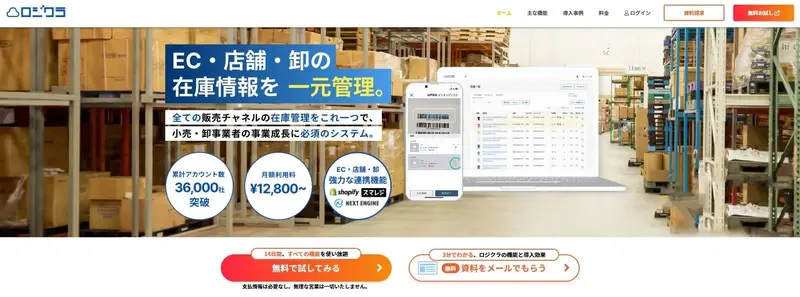
LogiClara is cloud-based inventory management software. It supports not only multi-channel inventory management but also operations involving multiple locations and outsourced warehouses. Because it allows for inbound/outbound processing and inventory checks via a smartphone app, there's no need for expensive barcode readers, making it easy for even inexperienced staff to use.
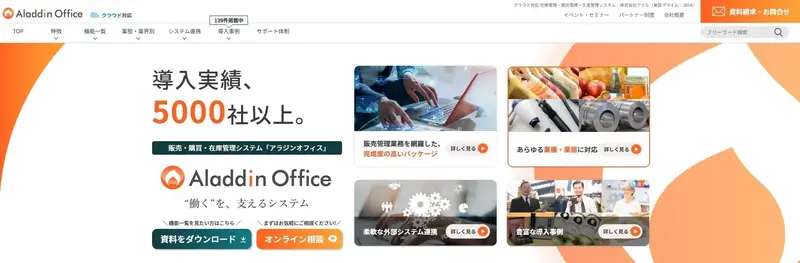
Aladdin Office is a sales and inventory management system with a proven track record of successful implementations. Its appeal lies in its ability to manage not only inventory but also production, and its customization options to suit industry-specific business practices. Because it can integrate with various external systems such as accounting software, e-commerce platforms, and attendance systems, it is also suitable for business owners who wish to continue using their current systems.
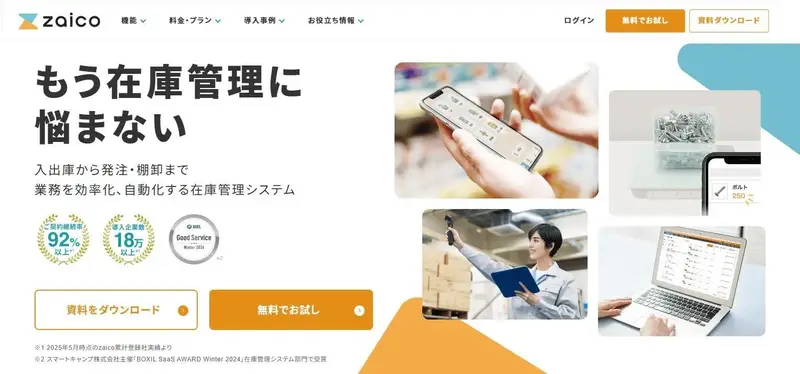
Zaico allows you to manage inventory, order placement, and stocktaking from your PC or smartphone. Its key feature is AI-powered inventory processing; simply take a picture of a product with your smartphone, and the AI will identify the image and detect the corresponding inventory data. This significantly simplifies the process of registering inventory data, managing inventory, and conducting stocktaking. A dedicated support staff member is provided during implementation, ensuring peace of mind even for those new to inventory management software or those requiring ongoing support.
In today's world, where multi-channel sales are commonplace, accurate inventory management is a crucial business strategy that impacts customer satisfaction and business growth. To prevent lost sales opportunities and mitigate the risk of excess inventory, a system that allows for centralized, real-time management of inventory information across all sales channels is essential.
Use the features and strategies introduced in this article to build an inventory management system that is optimal for your business and establish a competitive advantage in a rapidly changing market.
Frequently Asked Questions about Multichannel Inventory Management
What is multi-channel inventory management?
Multi-channel inventory management is the process of centrally managing inventory across multiple sales channels, such as e-commerce sites, physical stores, and social media, using a single system.
How can I manage inventory using a multi-channel approach?
Using a multi-channel platform like Shopify allows for multi-channel inventory management. It enables centralized inventory management across various channels, including online stores, physical stores, social commerce, and marketplaces.
What are the key points to consider when choosing multi-channel inventory management software?
- Does it have an inventory management function that allows you to check inventory levels in real time and identify patterns of stockouts?
- Can barcode inventory management be done?
- Can you perform data analysis?
- Is it easy to integrate with external systems?
- Is it easy to use?
What are the benefits of multi-channel inventory management?
- Because it can be synchronized in real time, accurate inventory levels can be visualized, preventing stockouts.
- This allows for demand forecasting that takes into account past sales data and seasonal influences, making it easier to maintain appropriate inventory levels.
- Even when operating multiple logistics centers, inventory information can be centrally managed across all locations, allowing for inventory allocation tailored to regional demand and sales conditions.
Share this article
- Share on Facebook
- Share on X
- Share on LinkedIn