跨境独立站开店
What is inventory management visualization? Benefits, methods, examples, and challenges.
This article introduces the meaning, benefits, and methods of visualizing inventory management. Review implementation examples and challenges to help you understand your inventory status, improve operational efficiency, and manage your inventory effectively.



This article introduces the overview, benefits, specific methods, challenges during implementation, and company case studies of inventory management visualization.
While inventory management is relatively easy when the number of products is small, it becomes crucial to manage inventory according to consistent rules as the business grows. If inventory management is not carried out properly, it can lead to increased time and effort spent on inventory checks and receiving/shipping processes, potentially resulting in decreased customer satisfaction and sales.
Visualizing inventory management is one way to easily understand your inventory situation. This article clearly explains the overview, benefits, specific methods, and challenges of implementing inventory management visualization. We will also introduce case studies of companies that have visualized their inventory management, so please refer to them.
What is inventory management visualization?
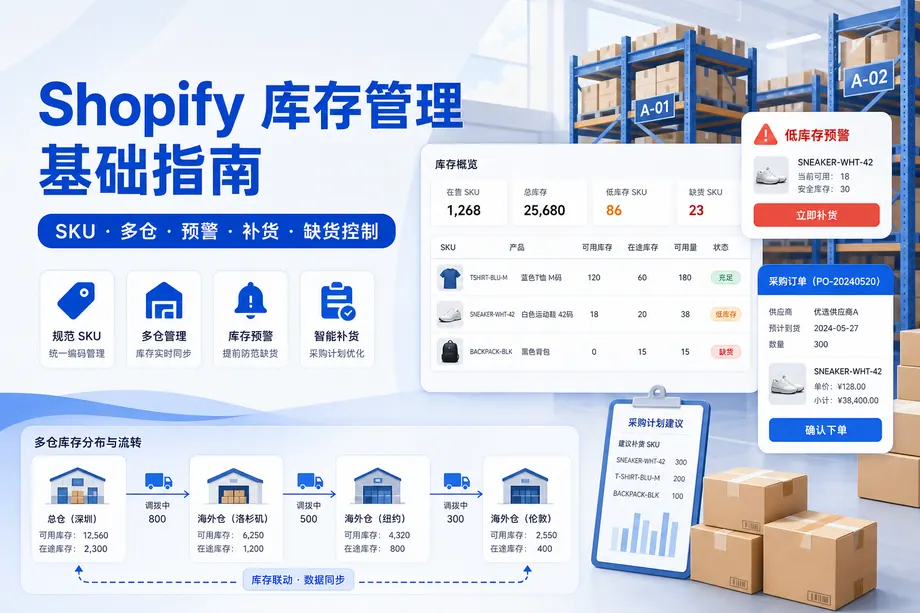
Visualizing inventory management means making information such as the quantity, storage location, and inbound/outbound shipments of products visible, allowing for an accurate understanding of the inventory status. This includes being able to check which products are where and in what quantities, as well as the history of inbound and outbound shipments.
Benefits of making inventory management visible
- Maintaining optimal inventory levels: By understanding the inventory levels and inbound/outbound status of products, and identifying any surpluses or shortages in inventory, it becomes easier to maintain the necessary inventory levels.
- It streamlines operations: You can quickly check the inventory levels and storage locations of products, making tasks such as inventory checks, ordering, and picking more efficient. It also makes it easier to share inventory information, preventing tasks from becoming dependent on specific individuals.
- Cost reduction: By reducing excess inventory, you can lower the costs associated with storing extra stock. Furthermore, you can streamline tasks such as inventory checks and ordering, leading to reduced workload.
- Orders can be placed according to demand: You can understand product sales status and seasonal demand through data. By ordering products with increasing demand earlier and reducing order quantities for products with decreasing demand, it becomes easier to prevent excess inventory and dead stock.
- It becomes easier to maintain product quality: By keeping track of the arrival date and storage conditions, and prioritizing the shipment of older products, it becomes easier to prevent quality deterioration due to long-term storage.
- This leads to improved customer satisfaction: By preventing delivery delays and order cancellations due to stock shortages, and ensuring a stable supply of products, it becomes easier to maintain customer trust.
- This makes it easier to improve cash flow: By reducing excess inventory and lowering inventory maintenance costs, it becomes easier to secure funds. These funds can then be used for business operations or new investments.
How to visualize inventory management
- Implement an inventory management system.
- Manage it using spreadsheet software.
- Perform location management
- Thoroughly implement 5S
- Automate inventory management
- Analyzing inventory data
- Conduct inventory regularly.
By implementing an inventory management system that allows for centralized management of information such as product inventory levels, storage locations, and incoming/outgoing shipments, it becomes easier to grasp the inventory status of each location in real time, even if you have multiple warehouses or stores.
Furthermore, linking sales channels with inventory management systems allows you to centrally manage inventory information from e-commerce sites, physical stores, and other locations. This also makes it easier to check inventory status across multiple channels, especially for businesses using a multi-channel sales model.
Shopify allows you to synchronize inventory between your physical store and online store using Shopify POS.
To reduce costs and make inventory management more transparent, you can use spreadsheet software such as Excel. By creating an inventory management sheet and recording product names, quantities, arrival/departure dates, and storage locations, you can view inventory information at a glance.
Spreadsheet software is easier to implement than dedicated systems and is suitable for small-scale inventory management. However, because data entry and updates are done manually, there is a possibility of input errors and missed updates. Also, as inventory levels and locations increase, management tends to become more complex, so it is important to consider migrating to an inventory management system according to the scale of your business.
Location management is a method of streamlining warehouse management by assigning identification information, such as shelf numbers, to the storage locations of products within the warehouse. This makes it easier to know where each product is located, reducing the time spent searching for inventory and leading to more efficient picking and inventory management.
Location management includes fixed locations, where each type of product is stored in a designated location, and free locations, where products are stored in available space within the warehouse. Because the storage location of products changes with free locations, combining it with an inventory management system makes it easier to accurately track the current storage location.
To make inventory management more transparent, it's also important to improve the warehouse and work environment. The 5S principles are key to creating a well-organized workplace that enhances work efficiency and safety.
- Organization: Separate what you need from what you don't.
- Organization: Decide where you want to store things and put them in their designated places.
- Cleaning: Clean the warehouse so that it is ready for use at any time.
- Cleanliness: Maintain a tidy, organized, and clean state.
- Discipline: Make these four initiatives known to employees and make them a habit.
By thoroughly implementing 5S, the storage locations and necessary items become clear, making it easier to know "where everything is." It is important to establish rules such as storing products in designated places and disposing of unnecessary items, and for employees to continuously practice them. In addition, regularly organizing and cleaning makes it easier to check the inventory status, which helps prevent work errors.
To grasp inventory information in real time, automating inventory management operations is also effective. By utilizing barcode inventory management and RFID (a technology that reads tags wirelessly using radio waves), the receiving and shipping of goods and the registration of inventory information can be automated.
Reducing manual data entry not only shortens the time required for inventory management but also helps prevent input errors. When integrated with an inventory management system, the scanned information can be automatically reflected.
By analyzing data accumulated in inventory management systems, you can understand product sales trends and inventory movements. Adjusting order quantities based on past sales data and seasonal demand enables data-driven inventory management.
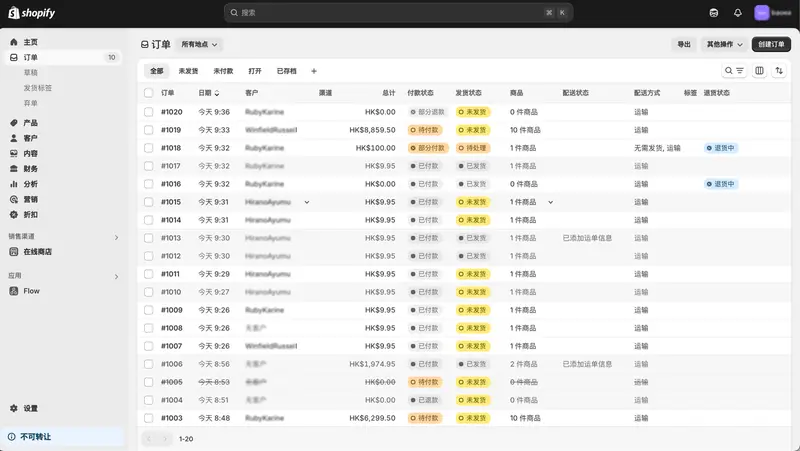
Shopify includes inventory management features that allow you to check inventory levels, change history, and adjust quantities.
Even when using inventory management systems to manage inventory information in real time, the actual number of items in stock may not always match the data. Therefore, it is important to conduct regular inventory counts and compare the inventory numbers in the system with the actual number of items in stock.
By conducting an inventory count and checking for discrepancies with inventory data, it becomes easier to identify problems such as input errors or lost inventory.
Examples of making inventory management visible
- CLASSICS the Small Luxury
- OSM International Co., Ltd.
CLASSICS the Small Luxury, a brand specializing in handkerchiefs, has implemented Shopify POS to centrally manage inventory for both its physical stores and online shop. This allows customers to view inventory across all stores and the online shop, and to order items not in stock at their physical locations from other stores, leading to improved customer convenience and higher quality service.
OSM International Co., Ltd., a sports marketing company, previously had separate warehouses for B2C and B2B operations, managing inventory independently. Furthermore, B2B inventory management was primarily manual, using spreadsheet software. By consolidating warehouses and centralizing inventory management, and by systematizing B2B inventory management, they have reduced inventory transfer costs and lead times, optimized storage costs, and achieved more efficient inventory management.
Challenges when implementing visualization of inventory management
- The transition to the new system will take time.
- It costs money to implement and operate.
To improve the visibility of inventory management, implementing a system that allows for centralized management of inventory information is effective. On the other hand, if inventory has been managed using spreadsheet software or similar methods, migrating to a new system and changing business workflows can be time-consuming.
Furthermore, it is important to create manuals outlining how to operate the system and the rules for data entry, and to provide training to ensure employees understand the new system and work procedures. Before implementation, organize the necessary functions and operating methods to prepare for a smooth transition in the workplace.
When implementing an inventory management system, costs are incurred not only for the software itself, but also for equipment such as barcode scanners and RFID technology, integration with existing systems, and employee training.
Therefore, when selecting a system, it is important to consider not only the implementation costs but also the costs associated with operation and maintenance. After clarifying the functions necessary for your company's inventory management, consider the cost-effectiveness by evaluating how much operational efficiency and cost reduction can be expected from the implementation.
By accurately tracking product inventory levels, storage locations, and shipping/receiving information, you can maintain optimal inventory levels, improve operational efficiency, reduce costs, and enhance customer satisfaction.
To make inventory management more transparent, you can use inventory management systems or spreadsheet software like Excel, as well as implement location management, 5S principles, automate inventory management, perform data analysis, and conduct regular inventory counts. It is important to choose the method that best suits your company's size and operations.
Furthermore, when implementing an inventory management system, you need to consider changes to business processes, employee training, and implementation and operating costs. Choose a method that suits your company's size and operations, and create a system that allows you to accurately track inventory information.
Frequently Asked Questions about Visualizing Inventory Management
What are the four principles of inventory management?
- The location of the inventory can be determined.
- The quantity of inventory can be determined.
- You can see the priority of the response.
- First-in, first-out (FIFO) is possible.
Why is inventory management so difficult?
Reasons why inventory management is difficult include input errors, ambiguity of management rules, errors during inventory checks, and reliance on specific individuals for management tasks.
How can I simplify inventory management?
One way to simplify inventory management is to implement an inventory management system. Using such a system allows you to centrally manage information such as the number of items in stock, storage location, and incoming/outgoing shipments, and to track inventory status at each location in real time. This streamlines tasks such as inventory checks and ordering, and also makes it easier to prevent inventory shortages or surpluses.
Share this article
- Share on Facebook
- Share on X
- Share on LinkedIn