跨境独立站开店
How to measure shipping boxes: Points to keep in mind when shipping
Learn how to properly measure shipping boxes, ship your goods safely at the best rate, and save on shipping costs.
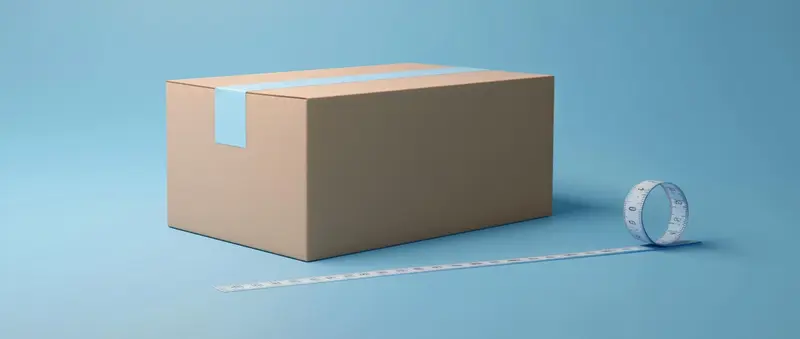
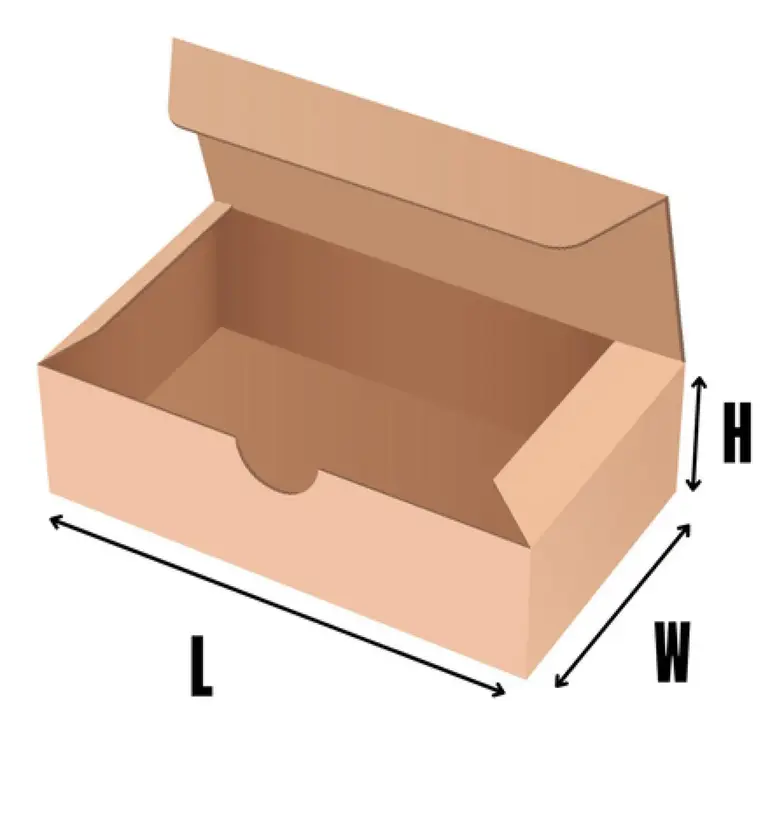
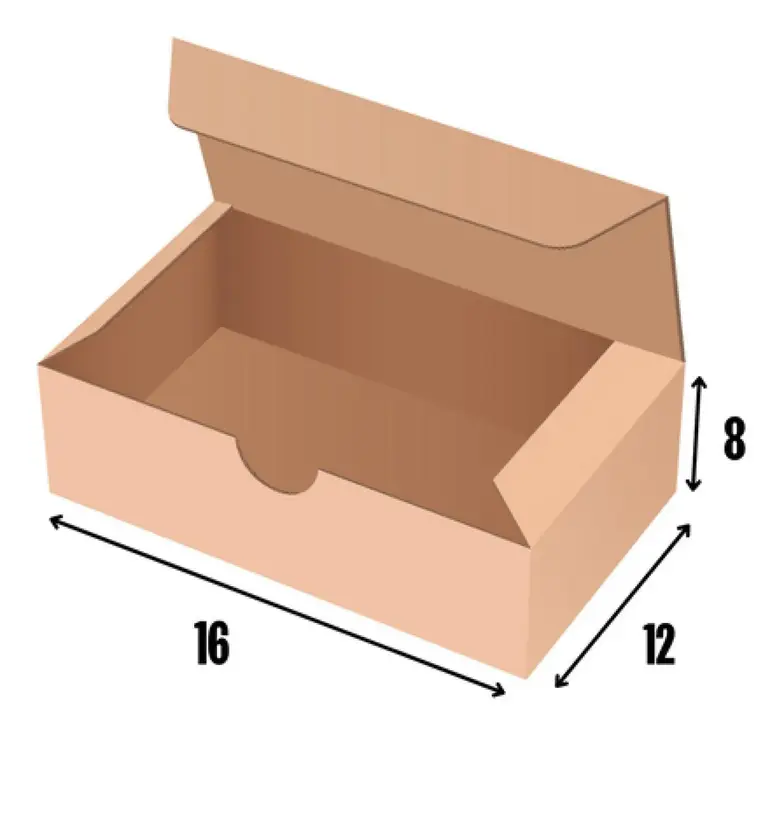
Learn how to properly measure shipping boxes, ship your goods safely at the best rate, and save on shipping costs.
Measuring your shipping boxes is something you should never ignore. Preparing packages for shipping can be confusing, especially if it's your first time, particularly if you're running a new business and processing your first order.
Knowing how to accurately measure a box is crucial for shipping. Shipping companies and freight providers charge based on either volumetric weight or actual weight, so they may ask for dimensions, volume, or girth.
Understanding these figures allows you to secure better shipping rates and determine the best shipping method for your business.
Once you master measuring shipping boxes and securing the optimal rates, this process becomes a natural part of your business. That's why it's crucial to do it right from the start.
How to measure shipping boxes
To measure your luggage, you will need measuring tools such as a measuring tape or ruler, as well as a pencil and paper to record the dimensions.
When measuring a shipping box, you need to measure its external dimensions.
When measuring the dimensions of a shipping box, measure the length, width, and height (length x width x height). Measurements must always be listed in this order.
To measure the dimensions of the box,
- First, measure the length. This will be the longest side of the surface with the flap.
- Next, measure the width. There is a flap on the width side as well, but it will be shorter than the longer side. Rotate the box 90 degrees and measure the width.
- Finally, measure the height. Close the box flap and use a measuring tape to calculate the height from top to bottom.
Note: The tolerance for manufacturing errors is ±3.2mm.
How to calculate the volume of a box
Knowing the volume of goods makes delivery, warehousing, and distribution easier. Calculating volume is crucial for optimizing materials and costs.
To calculate the volume of a package for delivery, you need to multiply its length by its width and its height.
Length × Width × Height = Volume. For example,
- Height = 40.6 cm
- Width = 30.5cm
- Height = 20.3cm
40.6 × 30.5 × 20.3 = 25,137 cubic centimeters (cm³)
How to measure the circumference of a box
For packages with unusual shapes, such as cylindrical containers used for shipping printed materials or posters, it is necessary to calculate the circumference.
First, you need to measure the width and height of your luggage. Use a flexible measuring tape to measure the circumference of the widest part of your luggage. This measurement will be the width. Next, measure the longest part from top to bottom. This is the height.
To calculate the waist circumference, use the following formula: width + height × 2.
Waist circumference = 2 × (width + height)
If we use the box in the example above, we add the height (20.3 cm) to the width (30.5 cm). This gives us 50.8. Then we multiply by 2 to get the circumference of 101.6 cm.
101.6cm=2×(30.5+20.3)
Ways to reduce shipping costs
With shipping costs rising globally, it's crucial to pay attention to changes in shipping rates. The following shipping tips for small and medium-sized businesses can help minimize costs.
- Use appropriate containers: Using large shipping boxes for small, lightweight items will increase costs. Always choose the smallest box necessary to safely ship your goods. For small items, consider using lightweight polymailers instead of boxes.
- Reuse old boxes or "ready-to-ship" (SIOC) packaging: In some cases, simply attaching a shipping label to the product's packaging can eliminate the need to repackage it in a different box.
- Take advantage of discounts: Check if your e-commerce platform offers discounted shipping rates. For example, Shopify Shipping helps vendors save up to 88% through discounts from various shipping carriers.
- Measure carefully: Most shipping companies will charge extra for packages exceeding the initially stated weight.
Legal requirements and requirements for carriers
Requirements vary depending on the shipping company. For example, domestic parcels may have a minimum length and girth of less than 170cm. Other requirements include a minimum height of 7.6cm, length of 15.2cm, and thickness of 0.6cm.
Let's learn more about the ground delivery package requirements of each shipping company. Yamato Transport and Sagawa Express have similar regulations.
Speed up shipping with Shopify
Shopify includes built-in tools for tracking, prioritizing, and processing orders all in one place, allowing you to ship orders faster and exceed customer expectations.
Common measurement errors
Mistakes are especially likely to occur when measuring multiple shipping boxes simultaneously. Here are some common mistakes.
- Measuring from the inside: Measuring a box from the smallest point instead of the largest can lead to inaccurate dimensions. To avoid this, always measure the box from the outside.
- Measuring on an unstable surface: Unstable surfaces can lead to inaccurate measurements. To avoid distortion, measure the box on a flat, stable surface.
- Measure the smallest point: Not all boxes are square or rectangular. For boxes with uneven or irregular shapes, measure from the widest and highest point.
Frequently Asked Questions about Measuring Shipping Boxes
How do you calculate the size of the box?
To calculate the size of a box, measure its length, width, and height. Multiply the three measurements together to find the volume in cubic centimeters. For example, if a box is 25.4 cm long, 12.7 cm wide, and 10.2 cm high, its volume is 25.4 × 12.7 × 10.2 = 3,290 cubic centimeters.
Are there any apps for measuring boxes?
Several apps are available for measuring boxes. For example, the iPhone and iPad app Measure Kit offers a comprehensive suite of advanced tools for measuring 3D objects. Other apps, such as AR Measure, use augmented reality and the device's camera to measure objects in real time.
Can you measure packages without a scale?
While it's possible to measure packages without a scale, this can lead to inaccurate measurements and potentially incur extra charges. We strongly recommend using a scale. A household scale is sufficient, and most post offices have scales available for customers.
How do you calculate the dimensions of a package?
Length, width, height, and girth are all dimensions. To determine these dimensions, use a measuring tape to measure the length, width, or height of the item. To determine the girth, add the height to the width and multiply by two.
Share this article
- Share on Facebook
- Share on X
- Share on LinkedIn