This guide introduces the basics of e-commerce and the essential functions required for an online store. Before actually launching your online shop, let's review the crucial strategies and operational points necessary for success.
Before setting up an online store with Shopify, you must check your payment settings. Choose payment methods that suit your store, such as credit card payments, convenience store payments, or cash on delivery.
An impulse buy refers to purchasing something that wasn't planned beforehand, based on a spur-of-the-moment idea or emotion. This often happens after feeling an urge to buy something, and is usually done without hesitation.
This article explains e-commerce site security measures for online shop owners. Understand the risks and safety measures you need to know to operate a secure and reliable e-commerce site.
This article introduces methods and tips for optimizing images. Improving website page speed offers numerous benefits, not just for e-commerce sites. In addition to methods, this article also covers the advantages of image optimization and the tools available.
This practical guide breaks down the strategies of 10 brands that have achieved success with omnichannel strategies. It organizes key points for data integration, linking stores and e-commerce, and personalization, providing hints that can be used to create your own customer experience.
This article showcases successful omnichannel case studies in the retail industry. Learn about mechanisms for a seamless customer experience, including inventory synchronization and mobile app integration, and discover key points for leveraging Shopify.
A collection of articles on Shopify themes and store design: How to choose between free themes, paid themes, and custom themes; the differences between Horizon and Dawn; theme installation, copy editing, publishing, and rollback; menu navigation, theme blocks, 404 errors and redirects; and the limitations of Canvas AI canvas, organized in the order of reading.
A Shopify Independent Website Guide for Chinese Cross-Border Sellers: The essential differences between independent websites and platform stores, why most people use Shopify to build independent websites, the complete cost structure and minimum investment for the first month, the setup path and timeline from 0 to 1, five traffic channels after launch, and when you shouldn't build an independent website.
Practical theme setup guide for Shopify theme developers: the relationship between settings_schema.json and settings_data.json, the required fields for theme_info, return values for common setting types, the division of labor between global settings and section settings, and real-world pitfalls such as losing configurations when changing the ID.
Shopify Theme Testing and Deployment Process: Checklist of functional, responsive, browser compatibility, performance, SEO and accessibility tests, pre-launch performance optimization, deployment process based on Shopify CLI and Git, and post-launch monitoring, maintenance and rollback methods.
Shopify Liquid Performance Optimization Guide: Performance metrics measurement and object access statistics, optimized writing of data preprocessing, loop iteration, filters and object access, lazy loading of image media, code splitting and modularization, caching strategies and mobile optimization checklist.
Shopify theme localization implementation: a complete approach including translation keys and locale files, currency formatting, date, time and address formatting, content localization, multilingual SEO, and RTL layout support.
Shopify Store Setup Guide for Sellers in Mainland China: 5 Required Documents Before Registration (Email, Business Qualifications, Payment Channels, International Credit Card, Domain Name) and Their Estimated Time, Complete Registration Process, 6 Essential Settings for Registration Day, and 5 Common Pitfalls.
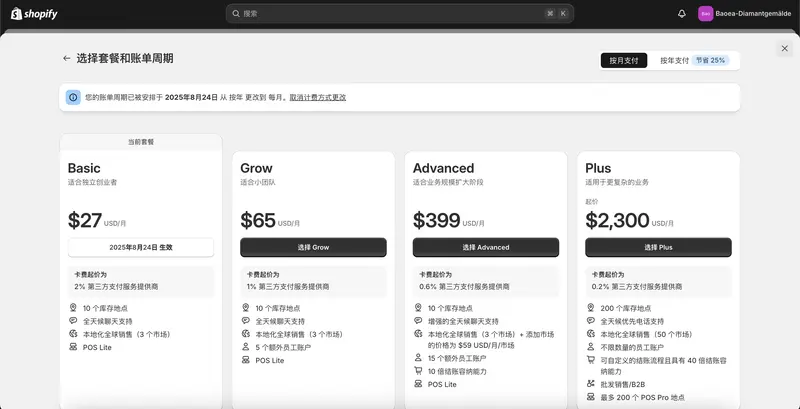
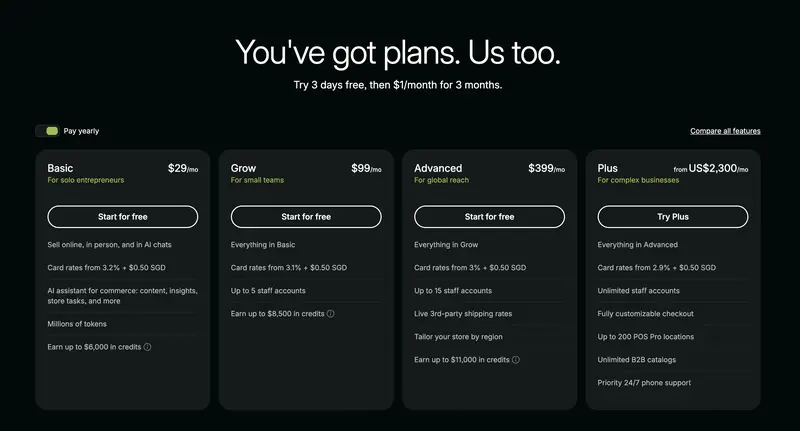
Shopify Fee Guide for Cross-Border Sellers: Latest monthly and yearly pricing for Basic / Grow / Advanced / Plus, the real difference between payment rates and third-party gateway commissions, upgrade thresholds calculated by GMV, payment method settings, and practical methods to reduce billing.
A data analytics configuration guide for new Shopify merchants. It covers essential reports from Shopify's built-in Analytics, Google Analytics 4 integration, Google Tag Manager installation, Facebook Pixel configuration, e-commerce event tracking, differences in reporting standards, and a checklist for going live.
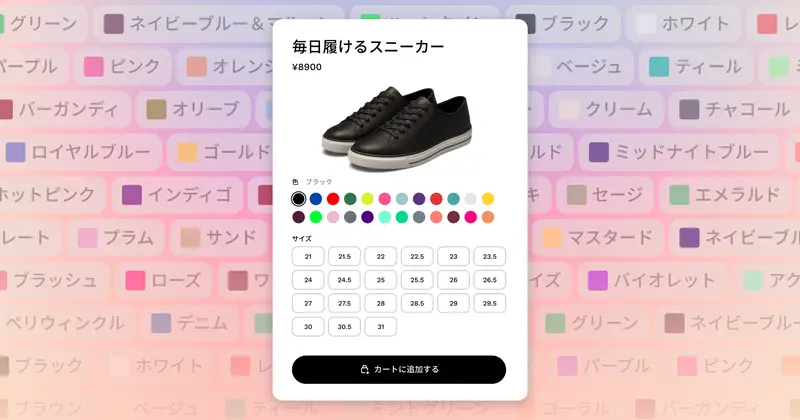
Shopify Product Variations from Zero to Advanced: Variation Concepts and Limitations, Creation and Bulk Management, Inventory and SKU Strategies, Variation Image Configuration, Front-End Selector Display Optimization, and Advanced Variation Techniques.
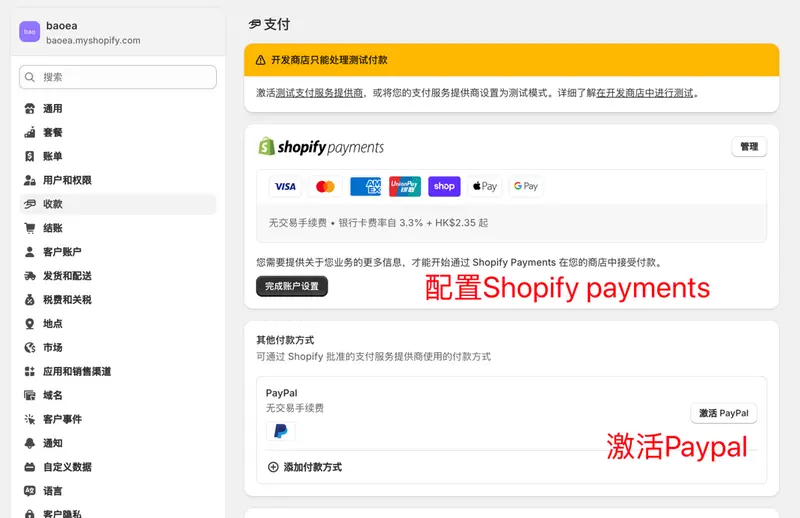
Shopify Payments Setup Tutorial: Shopify Payments activation and credit card types, PayPal Quick Pay, choices between other third-party payments and cash on delivery, local payments and installment payment configuration, and solutions for payment failures and frequently asked questions.
A beginner's guide to the Shopify platform for sellers with no prior experience: the essential differences between SaaS website building and self-built websites, six things Shopify truly solves for you, the complete cost structure (subscription fee + rate + application), four situations where Shopify is not suitable, and the next step from understanding to opening a store.
A complete guide to setting up email marketing for new Shopify merchants. It covers Shopify Email, Klaviyo, and Omnisend comparisons, subscription list setup, automated welcome/abandoned/repeat purchase processes, email content design, KPI monitoring, and compliance considerations.
A complete user guide to Shopify's built-in Web Performance dashboard. It covers access paths, interpreting Core Web Vitals metrics, methods for time-period analysis, reasons for data discrepancies with external tools like PageSpeed Insights, and troubleshooting common issues.
A comprehensive guide to web performance optimization for Shopify stores. It covers diagnostic approaches for the three Core Web Vitals metrics, the quantitative relationship between performance and conversion rates, setting up a monitoring system, and prioritizing optimization by page type.
 跨境独立站开店