跨境独立站开店
Shopify Store Registration and Opening Guide: Documents, Registration Process, and First Day Setup
Shopify Store Setup Guide for Sellers in Mainland China: 5 Required Documents Before Registration (Email, Business Qualifications, Payment Channels, International Credit Card, Domain Name) and Their Estimated Time, Complete Registration Process, 6 Essential Settings for Registration Day, and 5 Common Pitfalls.
I. Essential checklist before opening a store (including preparation time)
The key principle is: payment channels and entity qualifications are the two slowest things on the critical path and should be started on the day of registration or even earlier. Everything else can be done while the website is being built.
Regarding the two email addresses
Account email: Used for registration and login to the backend, and also for receiving bills and security alerts. It's recommended to use an overseas email address such as Gmail, and this email address should be permanently accessible – it's the sole credential for recovering your store.
II. Entity Qualifications: Can an individual actually do this?
Shopify allows individuals to register and open stores, but the hurdle lies in the payment process: While PayPal is the mainstream payment method in the US and Europe, Shopify only supports linking a business PayPal account. The minimum requirement for applying for a business PayPal account is a sole proprietorship business license. Therefore, for mainland Chinese sellers, registering a sole proprietorship is essentially an unavoidable step; the process can be found in the PayPal business account registration process.
Cards for paying Shopify bills
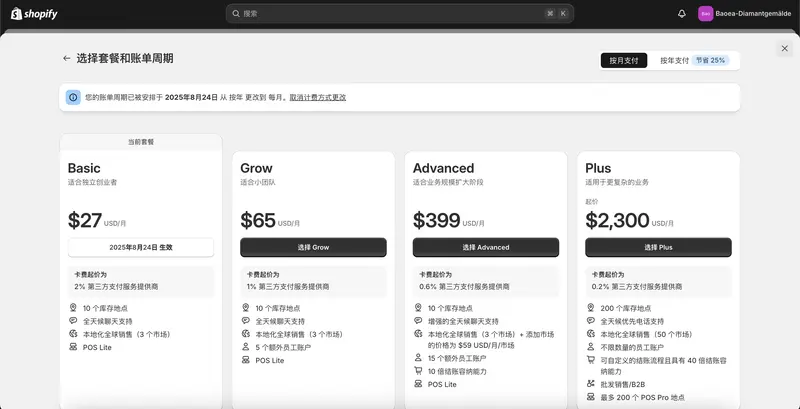
Billing (subscription fees, themes, apps) requires an international credit card: Visa, Mastercard, or American Express are all acceptable, but a dual-currency card issued by a domestic bank is the most convenient. Note two points: the card must be enabled for international transactions; cross-border transaction fees and exchange rate losses are charged by the issuing bank (usually 1%–2%), which are not reflected in the Shopify bill but are indeed costs.