跨境独立站开店
SEO audit for e-commerce sites: Checklist and benefits of implementation
Here's a checklist for SEO audits of e-commerce sites. Understand the specific measures to take and the benefits of implementing them for each item to help increase your organic traffic.

Here's a checklist for SEO audits of e-commerce sites. Understand the specific strategies and benefits to help increase your organic traffic.
An SEO audit for an e-commerce site involves checking the site structure, pages, product data, etc., to ensure that search engines and AI can discover products and display them appropriately for relevant searches.
A survey conducted by ITEC Hankyu Hanshin, an SI company, targeting 145 B2C manufacturers operating their own e-commerce sites, revealed that the top three issues that companies urgently want to resolve through promotional activities were "brand awareness" (1st place) and "new customer acquisition and traffic generation methods (web advertising, SEO, etc.)" (3rd place). With the challenges of attracting customers to e-commerce sites and improving brand awareness, it is crucial to identify search-related problems through SEO audits and use that information to make improvements.
This article will cover the scope of SEO audits for e-commerce sites, checklists for on-page and off-page SEO, and methods for prioritizing actions after an SEO audit.
Scope of SEO audit for e-commerce sites
E-commerce site SEO audits can be divided into three categories: technical SEO, on-page SEO, and off-page SEO. Technical SEO and on-page SEO are internal SEO measures, while off-page SEO is external SEO measures.
Technical SEO
Technical SEO verifies that search engines can correctly access your site and crawl and index the necessary pages. Key aspects include site structure, navigation, internal linking, URLs, pagination, metadata, structured data, site speed (including mobile), and JavaScript rendering.
On-page SEO
On-page SEO involves verifying that content such as product pages and collection pages meet users' search intent and use appropriate keywords. The audit also covers whether product data is properly organized, including the consistency of product information, structured data, and product feeds.
Offpage SEO
Offpage SEO involves checking external evaluations such as backlinks and citations where product names or brand names are mentioned on external websites. In recent years, in addition to traditional search engines, it has become important to consider GEO (Generative Engine Optimization) and AEO (Answer Engine Optimization), which make it easier for products to be discovered and recommended by generational AI and AI search.
SEO features built into Shopify as standard.
Shopify comes standard with the technical mechanisms necessary for e-commerce site SEO. In addition to automatic generation of sitemaps, canonical tags, and robots.txt, and SSL-enabled HTTPS, it also supports structured data for communicating product information to search engines, so users do not need to build an SEO technical foundation from scratch. Furthermore, much of the information is automatically updated when the site or products are updated.
On the other hand, users themselves need to decide which search keywords to target, how to structure their products and collections, and what to write in titles and product descriptions. It is also important to correctly register information such as product categories and attributes, and to manage URL redirects and indexing as needed. Furthermore, efforts to improve reputation outside of Shopify, such as customer reviews, external links, and mentions of products and brands by third parties, also contribute to SEO.
On-page SEO audit checklist
On-page SEO, along with technical SEO, is a crucial element of SEO measures performed within an e-commerce site. An on-page SEO audit verifies whether pages that match search intent are provided and whether product information, titles, headings, images, etc., are clearly presented for both search engines and users.
Check the correspondence between search intent and keywords.
Behind every search query lies the user's intent: to research, compare, or purchase a product. The more specific the search—for example, "long dress" or "black long dress"—the clearer the user's desired product and purpose becomes. Especially in recent years, with the rise of AI-powered conversational search, handling long and specific phrases has become crucial.
During the audit, we will check the correspondence between target keywords and product pages, category pages, product guides, etc. We will also check for "cannibalization," where multiple pages with the same search intent compete for the same keywords. If unintended pages are appearing in search results, we will review the role and content of each page and consider merging pages as needed.
Additionally, if you're simply posting product descriptions provided by manufacturers or suppliers, check to make sure they aren't identical to those on other e-commerce sites. Adding unique product information can increase the value of your page.
Check the product page and category page.
On product and category pages, check whether the page content matches the intended search intent. In addition to basic information such as product name, price, and availability, ensure that all necessary information for a purchase decision is included, such as specifications, size, material, features, usage instructions, and care instructions.
On the product page, please check the following items in particular.
- Are the title and description specific to the product?
- Will the features and benefits be easily understood?
- Are all the necessary purchase information available, such as price, availability, size, and material?
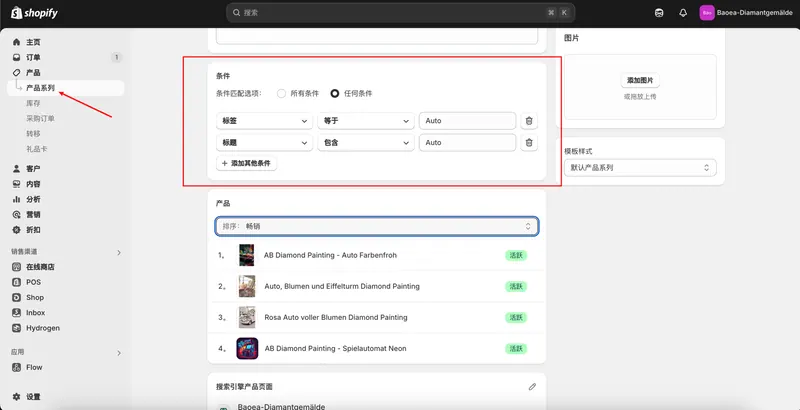
- Are the categories and attributes set correctly?
- Check if there are any internal links to discontinued products or any unnecessary URLs remaining.
On category pages, we check whether the title, description, and listed products match the search keywords and search intent. We also audit whether there are multiple category pages with similar product configurations, and whether there are internal links from menus and related pages to important category pages.
We also review search data, and if there are discrepancies between the actual search terms and the page content, we consider changing the title or description, or creating a new category page.
Check the title, meta description, and headings.
On e-commerce sites with a large number of products, it's common practice to manage product information as a catalog and display it using a common template. Therefore, if there are problems with some settings or templates, titles and descriptions may be duplicated across many pages. It's important to check not only individual pages, but the entire catalog.
Title tags, meta descriptions, and page headings each have different roles. During an audit, review them together.
- Check for any missing or duplicate title tags or meta descriptions.
- Are there a large number of nearly identical titles being generated, differing only in minor details such as product name or color?
- Are important pages set with unique titles and meta descriptions that accurately represent their content?
- Does the H1 tag appropriately represent the page's subject and search intent?
- Check for any missing H1 entries or unnatural multiple settings.
- Are H2 and H3 headings logically organized to show product specifications, sizes, materials, FAQs, and other relevant information?
Headings are used to indicate the information structure of a page, not for design purposes. While the title tag and H1 tag don't need to be the same text, it's important that they represent the same search intent and page content.
Check the image's alt text and filename.
Image alt text (alt attribute) helps screen readers and search engines understand images. File names also provide supplementary information to search engines about the image's content.
Regarding the images, please check the following points:
- Are appropriate alt text set for the main product images?
- Does the alternative text concisely and accurately describe the image content?
- Is there an excessive stuffing of keywords?
- Are there a large number of meaningless filenames like "IMG_4827.jpg" being used?
- Is there a clear naming convention that uses the product name, color, and shooting direction?
For e-commerce sites with a large number of products, checking every single image individually is inefficient. Prioritize key products and high-traffic pages, while also reviewing the rules used for setting alt text and filenames, and auditing for duplicate issues across the entire catalog.
Offpage SEO Audit Checklist
Product information and content on an e-commerce site tell search engines "what the site sells." Offpage SEO, on the other hand, checks how products and brands are evaluated by third parties through external links, word-of-mouth, reviews, and mentions on social media.
Check the quality of backlinks and whether they are broken.
Backlinks are links from external websites to your e-commerce site. During the audit, we check which sites are linking to your site, whether the links are concentrated only on the homepage, and whether they are also linked to key product pages and category pages.
Backlinks are important not only in terms of quantity but also quality. Ensure that they are naturally linked from reliable media and websites that are highly relevant to your products and industry. The anchor text used in the links should also be audited to avoid any unnatural bias.
Furthermore, deleting or changing the URLs of externally linked pages can result in the loss of valuable backlinks due to 404 errors and other issues. Review backlinks to discontinued products, ended campaigns, and moved content, and consider redirecting them to the relevant pages.
Check for mentions of the brand and third-party reviews.
Currently, not only search engines, but also generative AI and social media have become important points of contact for discovering and comparing products. A 2026 survey by Deloitte Tohmatsu showed that 35.0% of people in their 20s use AI to gather information on products and services, indicating the increasing use of AI for information gathering and comparison during purchasing. Furthermore, a survey on purchasing behavior in the age of social media by THECOO showed that 58.6% of people in their 20s purchase a product within a week of learning about it on social media. AI and the exposure of products and brands on social media are becoming important factors in attracting customers and driving purchases.
The audit will check the following points:
- Search using a combination of brand name or main product name with terms like "reviews," "comparison," and "ranking," and see how it's described on third-party websites.
- Check blogs, comparison sites, social media, marketplaces, etc., to see if any incorrect information remains, such as old prices, old specifications, or discontinued products.
- Are there any major problems with the content and ratings of the reviews and testimonials?
- When using generative AIs like ChatGPT or Gemini to ask about related products, will your company's products or brands be suggested as candidates, and will accurate information be provided?
If a third-party website contains significant errors, we will consider requesting corrections from the source to the extent possible. Regarding the generated AI, since its responses can be inconsistent, we will review it not for ranking purposes, but to understand the information sources and context related to our own company.
Check product information on external channels.
Products on e-commerce sites are discovered not only through your own website but also through various external channels such as search engines, AI search, social media, affiliate programs, and collaborations with creators. Identify all the channels you use and verify that product information and links are correctly integrated.
When partnering with affiliates or creators, we verify the validity of links and coupons, and ensure that they do not direct users to discontinued products or URLs that have been changed. If products are listed on Google Shopping or similar platforms, we also check that the product feed is correctly integrated and that information such as price and stock status matches the e-commerce site.
For businesses with physical stores or service areas, it's important to verify that the store name, address, business hours, contact information, and photos listed on Google Business Profiles and other platforms are up-to-date. It's also crucial to ensure there are no discrepancies between store information on the e-commerce site and external services.
Prioritize actions to take after an SEO audit.
If multiple issues are found during an SEO audit, instead of fixing them all at once, we prioritize the solutions based on their impact on SEO and sales, as well as their urgency.
8 Items to Prioritize for SEO Improvement
The following are eight points compiled by e-commerce experts in anticipation of dealing with AI agents. Search engines and AI-driven product searches share many common elements, such as the need for accurate and structured product information, and can be used as a reference when prioritizing actions after an SEO audit.
Response Phase
Audit items
Urgency of response
Product data verification and correction of errors
Product page and category page
Develop structured information such as product attributes.
Review and correct structured data
Structured data
Integration of product feeds and AI services
Product information on external channels
Respond as needed
Accuracy of product information such as price and stock availability
Product pages, structured data, and product information from external channels.
Responding to overseas markets
SEO settings for overseas websites
As soon as possible
GEO (Generation Engine Optimization)
Brand references and third-party evaluations
Testing and Monitoring
Search performance, external channels, and visibility in generated AI.
Prioritize using analytics and Google Search Console
Prioritize your pages not only based on their SEO importance, but also on their impact on actual traffic and sales. Google Search Console allows you to check page impressions, clicks, CTR, and average ranking for each page. For e-commerce sites, you can check the number of sessions, conversion rate, and sales for the same page.
For example, pages that contribute significantly to sales but are experiencing a decline in organic traffic should be prioritized for improvement. Similarly, pages with high search engine impressions but low click-through rates (CTRs) and high conversion rates after visits should be reviewed to see if there's room for improvement in the title or meta description.
By recording the figures before implementing the measures and comparing them to the same metrics after search engines recrawl the site, you can confirm the effectiveness of the improvements. Since Search Console and analytics use different methods to measure metrics, it is important to compare the trends of increase or decrease before and after the measures are implemented, rather than trying to reconcile the discrepancies between the two sets of figures.
In an SEO audit of an e-commerce site, we check not only on-page SEO, such as whether pages and product information match search intent and whether titles and images are properly set, but also off-page SEO, such as backlinks, reviews, and third-party ratings. Furthermore, it is important to understand how products and brands are discovered and evaluated not only by search engines, but also through generative AI and social media.
Once the audit identifies problems, prioritize them by considering their impact on search traffic and sales, as well as the urgency of the response, and then implement improvements. Regular SEO audits allow you to grasp the challenges and changes of your e-commerce site in a timely manner, leading to continuous SEO improvements.
Share this article
- Share on Facebook
- Share on X
- Share on LinkedIn