跨境独立站开店
What is the difference between copyright and trademark rights? A summary of intellectual property rights.
Do you correctly understand the difference between trademarks and copyrights? Here, we'll clearly explain the differences in their characteristics and what they protect. We'll provide hints to help you decide which one to choose to protect your brand and content.
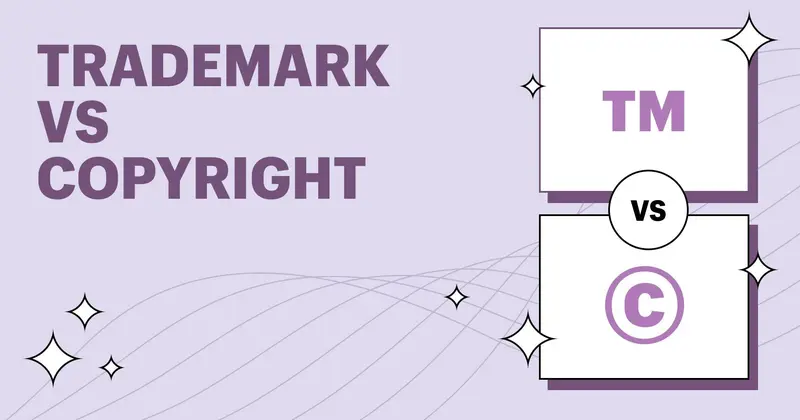




This article clearly explains the differences between trademarks and copyrights, including their characteristics and the scope of protection they provide.
Trademarks and copyrights are terms commonly heard not only in the business world but also in general society. You've probably seen symbols such as ™ (trademark), ® (registered trademark), and © (copyright) attached to various brand names, logos, and titles.
Although both trademarks and copyrights protect intellectual property and are often confused, they serve different purposes.
It's important for not only companies aiming for corporate branding or patent acquisition, but also small business owners and those considering selling original goods as a side hustle to have a basic understanding of these differences and similarities.
Use this article as a guide to understand the difference between copyright and trademark rights and how to effectively utilize them in your business.
What is a trademark?
A trademark is a name or mark (identifying symbol) used by a business to distinguish its own goods or services from those of others. Trademarks can be in the form of letters, symbols, figures, or three-dimensional objects. A mark displayed on a product is called a "trademark," while a mark displayed on a service is called a "service mark."
A trademark right is the exclusive right to use a trademark in relation to goods or services that specify that trademark, and it arises upon registration of the trademark. The significance of trademark registration lies in protecting a company's brand, goods, and services, and ensuring exclusive use. This prevents imitation and misuse by other companies, and helps build customer trust and loyalty.
Examples of trademarks
Trademarks apply not only to tangible goods, but also to intangible services and brands that symbolize a company or product group. While most trademarks are created by companies, there are also examples created by individual designers, such as Irasutoya.
- Tangible products (e.g., Prius, Pocari Sweat, VAIO)
- Intangible goods and services (e.g., Tabelog, Uber Eats, Irasutoya)
- Brands (e.g., Toyota, Muji, Uniqlo)
What is copyright?
Copyright refers to the right of an author to exclusively control and profit from a work that falls within the fields of literature, scholarship, art, or music, which is a creative expression of thoughts and feelings. It does not concern the artistic value of the work, but rather it is sufficient if the author's individuality is expressed and demonstrated.
Copyright allows copyright holders to grant or prohibit the use of their works by anyone other than the copyright holder. Copyright arises when a work is created, and as a general rule, the protection period lasts for 70 years after the author's death.
Copyright examples
Copyright is not a single right, but rather a set of rights granted to the author, and the types of these rights (subsidiary rights) are specifically defined in the Copyright Act.
- Reproduction rights (e.g., creating sheet music from a song)
- Screening rights, performance/musical performance rights, exhibition rights (e.g., adapting a script into a play and performing it)
- Broadcasting rights, recitation rights (e.g., posting works online)
- Distribution rights, transfer rights, lending rights (e.g., renting CDs to the public)
- Translation rights, rights to use derivative works (e.g., adapting a manga into a film)
The difference between trademark rights and copyright
There are five main differences between trademark rights and copyrights.
- Protected
- Conditions for the Origin of Rights
- Duration
- Requirements for the exercise of rights and criminal penalties
- Purpose and jurisdiction of the legal system
Trademark rights: Protect trademarks (names, logos, services, etc.) and the business reputation of the rights holder accumulated through them.
Copyright: Protects creative works (literature, music, art, programs, videos, etc.) that express thoughts and feelings.
Trademark rights: Trademark rights are granted upon registration, after application and examination by the Japan Patent Office.
Copyright: Copyright is based on the accrual principle, meaning it automatically arises the moment a work is created, and no registration is required.
Trademark rights: Valid for 10 years after registration, and can be renewed semi-permanently through renewal procedures.
Copyright: Copyright is usually protected for 70 years after the author's death, and there is no renewal system.
Trademark rights: If a registered trademark is used in a way that is identical or similar to it, an injunction can be taken even if it is not intentional or negligent. Furthermore, intentional infringement of trademark rights is subject to criminal penalties.
Copyright: Infringement occurs when it can be proven that a work was referenced or imitated, rather than being merely a coincidence. Infringement is subject to criminal penalties, but prosecution is required except in egregious cases.
Trademark rights: These are administered by the Japan Patent Office and aim to promote industrial development and protect the reputation of trade.
Copyright: The Agency for Cultural Affairs oversees copyright, with the aim of promoting cultural development and protecting the creative spirit of authors.
Similarities between trademark rights and copyright
Since both fall under intellectual property rights, they also share the following commonalities:
- Exclusive usage rights: Both have the exclusive right to use the protected material.
- Civil protection measures in case of infringement: In both cases, you can seek injunctions and damages if your rights are infringed.
- Criminal Penalties: Intentionally infringing on trademark rights or copyrights is punishable as a crime.
When are trademarks and copyrights needed?
Trademarks play an important role in protecting your brand's identity and reputation, so you should consider registering one when you start your business or as your brand recognition grows.
Copyright arises automatically for creative works, so registration is not required. In e-commerce businesses, copyright becomes relevant when selling original goods using your own illustrations or when selling photographs and other digital content.
Understanding copyright is important not only for business purposes, but also when publishing novels online or uploading manga and other works to social media.
It's important to understand trademark rights and copyrights so you can properly respond if your rights are infringed by others. Furthermore, trademark rights and copyrights are crucial not only for protecting your own rights, but also for avoiding infringement of others' rights when creating and selling products.
The difference between trademark rights and copyrights lies in the fact that trademarks cover goods and services and require registration, while copyrights cover creative expressions of thoughts and feelings and arise spontaneously.
In addition, trademark rights and copyrights differ in terms of their expiration dates, methods of exercising those rights, penalties, and the governing authorities.
Businesses, as well as anyone considering selling digital content or illustrations, should have a solid understanding of trademarks and copyrights.
Frequently Asked Questions about Trademarks and Copyrights
Is a logo a trademark or a copyrighted work?
A logo is a mark representing a brand, product, or service, and therefore constitutes a trademark. Highly creative logos may be granted copyright protection, but this is not always the case.
Which takes precedence, copyright or trademark rights?
In some cases, copyright takes precedence over trademark rights. Both are important intellectual property, but even trademark owners cannot use their registered trademarks if they infringe on prior copyrights (Article 29 of the Trademark Law).
How long is the validity period of a trademark?
Trademarks are valid for 10 years, but can be renewed indefinitely through the renewal procedure.
Should I trademark my business name?
It's a good idea to register your business name or trade name as a trademark. If you don't, there's a risk that another company might register the same name as yours as a trademark and seek an injunction against its use.
Do AI-generated content have copyright?
Currently, copyright is not granted to works generated by AI. However, depending on the degree of human involvement in the creation process (such as providing prompts for creation conditions, or subsequent processing and editing of the resulting work), it may be possible for that person to be granted copyright.
Share this article
- Share on Facebook
- Share on X
- Share on LinkedIn