跨境独立站开店
Differences between payment gateways and payment service providers: Advantages and disadvantages
This article explains the differences between payment gateways and payment processing companies, as well as the advantages and disadvantages of each. Review the necessary mechanisms for credit card payments to help you choose the payment service best suited to your company.
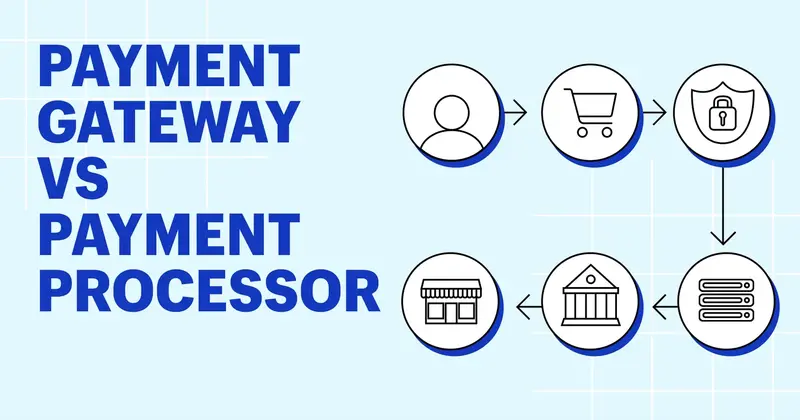
This article explains the differences between payment gateways and payment processing companies, as well as the advantages and disadvantages of each.
When implementing payment methods in an online shop, you might wonder, "What's the difference between a payment gateway and a payment processing company?" Both are essential for online payments, but their specific roles and functions differ.
This article clearly explains the differences between payment gateways and payment service providers. We'll also discuss the advantages and disadvantages of each, so please use this as a reference when choosing the payment solution that best suits your company.
The difference between a payment gateway and a payment processing company
Many payment processing companies integrate payment gateway functionality into their own services. Therefore, in some cases, simply contracting with a payment processing company may grant you access to payment gateway features.
What is a payment processing company?
For example, when a merchant accepts credit card payments, they contract with a payment processing company. When a customer makes a payment, the payment processing company transmits the transaction information to the credit card network and the customer's bank. If the customer's bank approves the transaction, the merchant is notified of the result, and the payment for the approved transaction is deposited into the merchant's bank account. If the transaction is rejected, the result is notified to all parties involved.
Advantages of using a payment processing service
- Centralized payment management: You can implement multiple payment methods together and centrally manage sales and receipts without having to contract with multiple payment services individually.
- Reduced burden of payment management: Sales from multiple payment methods can be managed in one place, streamlining payment processing.
- Risk Management: We also provide support for risk management related to payments, including fraud prevention (EMV 3-D Secure), chargeback handling, and legal compliance.
Disadvantages of payment processing companies
Using a payment processing company incurs costs such as transaction fees and monthly charges. Furthermore, payment screens and flows must conform to the provider's specifications, making it difficult to implement unique features or detailed customizations. Additionally, outsourcing payment processing to an external service means you may be affected by system failures or specification changes.
What is a payment gateway?
A payment gateway is a system that securely collects and authenticates customer payment information for online payments and transmits it to payment processing companies, such as payment service providers. It plays the same role online as a credit card terminal in a physical store. Transactions are made secure through encryption of payment information, and by supporting multiple payment methods, it enables smooth payments at online shops. By functioning in conjunction with payment service providers, it provides an environment where customers can complete payments with peace of mind.
Benefits of a payment gateway
- Smooth Payment Process: By securely receiving customer payment information and quickly processing payments, we create a stress-free purchasing experience. This also leads to increased customer satisfaction and repeat purchase rates.
- Security: We protect customer financial information from the risk of data breaches by encrypting and transmitting personal information using SSL/TLS. We reduce the risk of data breaches by securely handling card information in a PCI DSS-compliant environment.
Disadvantages of payment gateways
Payment gateways vary in the payment methods, functions, and pricing structures they support, depending on the service used, so it's necessary to choose a service that suits your company's needs. Furthermore, when using an external payment gateway, there's a risk that online payments may become temporarily unavailable if system failures or communication problems occur.
A payment gateway is a system that securely transmits payment information, while a payment service provider is a business that supports payment processing, sales, and deposit management. When running an online shop with Shopify, using a payment service that integrates the functions of both reduces the hassle of individually contracting and setting up each service.
Shopify Payments integrates payment gateway and processing functions, eliminating the need to set up separate external payment processors or accounts. Furthermore, orders processed through Shopify Payments, Shop Pay, and PayPal Express Checkout incur no third-party transaction fees.
Choose a payment processing service that suits your business and aim to create an online shop that is easy for customers to use.
Frequently Asked Questions about the Difference Between Payment Gateways and Payment Service Providers
Are both a payment gateway and a payment processing service provider necessary?
If you only accept cash, bank transfers, or in-store card payments, you don't need a payment processor or payment gateway. However, if customers use online payment methods such as credit cards, you will need both functions.
What else is needed besides a payment gateway?
To accept online credit card payments, you need a payment gateway in addition to a payment account. A payment account is a business account used to accept card payments. Some payment gateway providers offer a bundled package that includes the opening of a payment account and other necessary payment services.
What is the difference between a payment gateway and a payment processing company?
Payment gateways and payment service providers work together to process online payments, but their roles are different. The payment gateway encrypts the payment information received from the customer and securely relays it to the business that will process the payment. The payment service provider, on the other hand, processes the payment based on the payment information and assists with tasks such as depositing funds into the merchant's bank account. It's worth noting that many payment service providers also integrate payment gateway functionality into their own services.
Share this article
- Share on Facebook
- Share on X
- Share on LinkedIn