 跨境独立站开店
Differences between headless commerce and traditional e-commerce: How to choose and examples
This article explains the differences between headless commerce and traditional e-commerce. Understanding their respective features, advantages, and disadvantages, along with case studies, will help you decide which to choose.
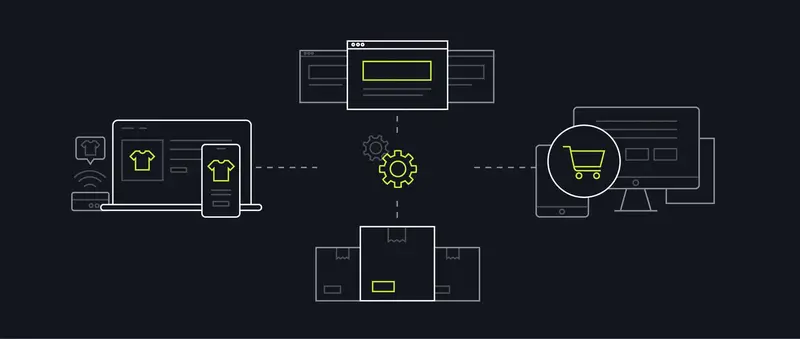


System Structure
Headless commerce is characterized by its configuration that separates the frontend and backend and uses API integration. Because the frontend can be developed independently while maintaining the e-commerce functionality on the backend, it is easier to flexibly improve the UI and expand functionality. On the other hand, traditional e-commerce generally integrates the backend, which handles product management and payment functions, with the frontend, which is viewed by the user. Therefore, it is easier to centrally manage the entire system.
Customizability and design freedom
With headless commerce, the front-end can be developed independently, allowing for designs that align with the brand concept and the pursuit of unique UI/UX. The flexibility to implement features such as product page presentation, content integration, and dynamic effects makes it an ideal configuration for companies that want to meticulously optimize the UX design of their e-commerce site, and for brands that prioritize customer experience.
Display speed and performance
On e-commerce sites, display speed is a crucial factor directly impacting user experience and conversion rates. Headless commerce, by retrieving only necessary data via APIs, offers the advantage of easily adjusting display speed and performance on the front-end. This is particularly beneficial for e-commerce sites with high mobile usage, potentially leading to improved user experience and reduced bounce rates through faster loading. However, actual performance is heavily dependent on the development design and operational structure.
Multi-channel compatible
Because headless commerce has a separate front-end, it is easy to integrate with not only websites but also smartphone apps, social media, digital signage, and physical store systems. In recent years, more and more companies are emphasizing a shopping experience that spans both online and offline, and its high compatibility with omnichannel strategies is attracting attention.



