 跨境独立站开店
How to increase customer acquisition effectiveness through customer identification by Shop
This article explains the difference between customer data and customer identification, and how to implement customer identification using Shop. Understand the role of customer identification in marketing and use it to improve the efficiency of your customer acquisition.
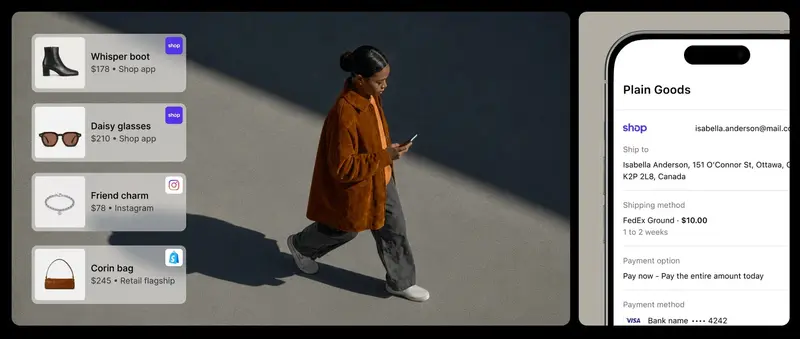
This article explains the difference between customer data and customer identification, and how Shop can be used to identify customers.
Even if customer acquisition metrics are strong, it doesn't necessarily mean that sales and profits are growing. When the same customer who came from multiple channels, such as advertising, search, and email, is recorded as a separate customer for each channel, it becomes impossible to accurately track the actual number of customers acquired and the cost per acquisition (CAC).
Many companies are using customer data platforms (CDPs) and attribution analytics to integrate customer data and measure advertising effectiveness. However, these are systems that analyze collected data after the fact and do not identify who the customer is at the time of purchase.
For example, if an email address cannot be linked to past purchase history, or if customers visiting from a different channel cannot be recognized as the same person, there is a possibility of counting existing customers as new customers. In other words, collecting and analyzing customer data is different from correctly identifying customers.
To address these challenges, Shopify offers Shop, a system that connects e-commerce sites with customers by utilizing buyer authentication information, allowing for the identification of who made the purchase. This enables a more accurate understanding of customer acquisition effectiveness and informs the development of marketing strategies.
This article explains the difference between customer data and customer identification, the impact of customer identification on customer acquisition, and introduces methods for solving problems using Shop.
The difference between customer data and customer identification
Customer data refers to information collected by companies from various touchpoints, such as email addresses, purchase history, and website browsing history. By integrating and analyzing this data, companies can understand customer behavior and purchasing trends. However, since customer circumstances and interests change over time, past data may not accurately reflect the current customer profile. Furthermore, data may be scattered across multiple platforms, making it difficult to correctly link information about the same individual.
On the other hand, customer identification refers to identifying who is visiting an e-commerce site or purchasing products. For example, if a customer is authenticated, they can be identified the moment they access the e-commerce site, making it easier to understand their browsing behavior before purchase. In physical stores, if customers can be identified at the time of payment, it becomes possible to link online and in-store purchase history.
Thus, while customer data provides information for analyzing past behavior, customer identification is a mechanism for recognizing current customers and linking them to past information. By combining the two, it becomes possible to understand customer behavior more accurately and use that knowledge to implement appropriate marketing strategies.
Challenges of customer identification by external platforms
Many e-commerce businesses use e-commerce marketplaces and advertising platforms to attract customers and make sales. However, with these external platforms, the management and scope of customer information provision depend on the platform's system, which can sometimes prevent businesses from fully understanding customer behavior and purchase history.
For example, if you cannot link customer information from an e-commerce marketplace to your own e-commerce site's customer data, it becomes difficult to understand that customer's purchase history and purchasing trends. As a result, the efficiency of marketing strategies, such as delivering advertisements intended for new customers to existing customers, may decrease.
E-commerce malls and advertising platforms are effective means of reaching a large number of consumers, and their use itself is not the problem. What's important is to establish a system that allows you to continuously monitor your relationships with customers while utilizing external platforms.
Shop's customer identification mechanism
Shopify's Shop platform links the seller's e-commerce site with the buyer's authentication information, providing a system that identifies customers when they visit the site or make a purchase. This allows businesses to leverage customer information and improve their marketing strategies, rather than relying solely on post-purchase data matching.
Timing of customer identification by the shop
Shop allows you to identify customers from the moment they access your online store. Shop's login function uses the same authentication information as Shop Pay. Customers with a Shop account can log in using previously used authentication information, allowing stores to personalize services such as discounts and product suggestions to customers even before they make a purchase.
Shop Pay simplifies the checkout process by identifying the buyer during payment and utilizing saved shipping and payment information. This can be used not only in online stores but also in physical stores using Shopify POS and the Shop app, providing a seamless shopping experience leveraging Shop's authentication credentials. This makes it easier to connect customer information across multiple sales channels.
Streamlining customer acquisition through customer identification
Shopify allows you to collect and utilize information about customer purchase history and behavior through your online store and Shop app. The advantages of running an e-commerce site with Shopify extend beyond just building and managing your store; it also allows you to leverage this Shopify ecosystem.
Accurate customer identification allows you to distinguish between existing and new customers, improving the accuracy of your ad delivery. For example, Shopify Audiences is a feature that leverages Shopify's buyer data to create audiences for ad delivery. It integrates with advertising platforms such as Meta, Google, and TikTok, helping you acquire new customers and optimize your ad spending. However, Shopify Audiences is currently only available to eligible stores in the US and Canada and is not available in Japan.
On the other hand, Shop Campaigns is a customer acquisition service that is also available in Japan. It works by setting a target cost per acquisition (CAC) and paying a fee for each new customer who meets the conditions, allowing businesses to acquire new customers while avoiding duplication with existing customers.
According to a study published by EY, customers who receive personalized experiences from brands are reported to spend up to three times more per order. Leveraging existing customer information through customer identification and providing personalized shopping experiences can lead to improved e-commerce conversions.
Check your customers' Shop usage status.
The number of existing customers using Shop Pay or the Shop app may be higher than you anticipate. Understanding the percentage of customers identifiable through Shop can provide an opportunity to review your customer acquisition strategy. Let's check how much of your customers are using Shop.
To improve the efficiency of customer acquisition, it's crucial not only to collect and analyze customer data, but also to correctly identify new and existing customers. Customer identification reduces wasted advertising and allows for improvements to marketing strategies.
Shopify Shops leverage buyer authentication information to identify customers, supporting personalized experiences before purchase and streamlining customer acquisition. Utilize Shops' features to make more effective use of customer information for marketing.
Share this article
- Share on Facebook
- Share on X
- Share on LinkedIn



