 跨境独立站开店
Powerful women are taking action! E-commerce trends from New York - Women's History Month Edition
These days, spring has truly arrived, and flower buds are beginning to swell. In keeping with this gentle atmosphere, March 8th is International Women's Day worldwide, and the entire month of March is Women's History Month. As calls for gender equality grow louder around the world, various movements are also taking place in the United States.

These days, spring has truly arrived, and flower buds are beginning to swell. In keeping with this gentle atmosphere, March 8th is International Women's Day worldwide, and the entire month of March is Women's History Month. As calls for gender equality grow louder around the world, various movements are also taking place in the United States.
This is the latest e-commerce news series from New York, bringing you the latest news and information from the US. This time, we'll be covering Women's History Month. Previous articles can be found here.
What is Women's History Month?
In the United States, the origins of Women's History Month can be traced back to the first International Women's Day in 1911. In 1978, educators in Sonoma County, California, started Women's History Week, centered around March 8th. The impetus for this initiative was the lack of women's history in the school curriculum and the desire to raise social awareness of women among the general public. Subsequently, various states made similar curriculum changes with the goal of achieving gender equality in education.
In February 1980, under President Jimmy Carter, a presidential decree was issued designating March 2-8 as National Women's History Week. In 1987, the National Women's History Project lobbied Congress to designate March as National Women's History Month, and the bill passed. Since then, March has been recognized as Women's History Month.
The objectives of Women's History Month are as follows:
- To support and further improve the social status of women.
- Celebrating the contributions of female activists who have advocated for women's rights to independence and shaped history.
- We aim for an equal society where women are not discriminated against simply because they are women.
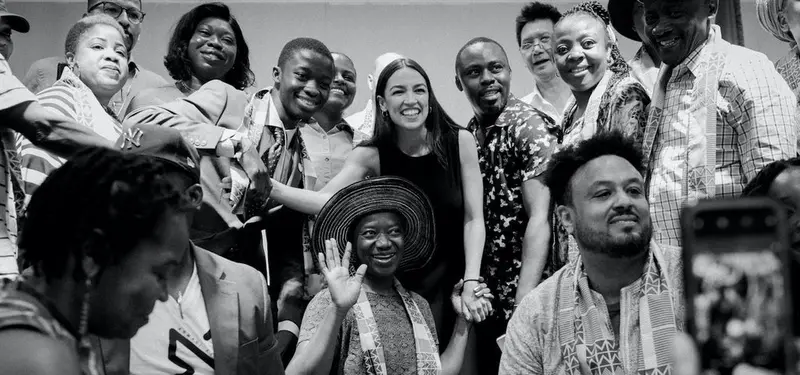
Women's History Month in 2021 saw unprecedented enthusiasm. Kamala Harris, the newly elected Vice President, is the first woman to hold the position. Her appointment has given hope and strength to many women. As symbolized by this, women like Alexandria Ocasio-Cortez, who grew up in the Bronx working class, are beginning to make their mark in American politics, fighting to change society with the support of the people.
Last September, Ruth Bader Ginsburg, who had advocated for the elimination of gender discrimination and served as a Supreme Court Justice for 27 years, dedicated to improving the status of women and other minorities, passed away. Many liberals mourned her death, but her will remains a driving force for many women striving to improve their social status.
Beyond the United States, there are influential female political leaders around the world, such as German Chancellor Angela Merkel and New Zealand Prime Minister Jacinda Ardern. According to the Inter-Parliamentary Union, headquartered in Geneva, Switzerland, the average percentage of women in parliament in 2020 was 25.5%, while Japan ranked 166th overall with only 9.9%, the lowest among the G7 countries. Nevertheless, we can only hope that female leaders like Tokyo Governor Yuriko Koike will lead the country forward.
Women begin to speak out
In recent years, with the development of social media, not only major news stories but also the opinions and beliefs expressed by individuals can spread around the world in an instant. In the United States, in 2017, the #MeToo movement erupted on social media, starting with Instagram, after actresses who had been sexually assaulted and harassed by a famous Hollywood film producer spoke out. Now, not only women, but also LGBTQ individuals and people of various genders who have experienced sexual assault are using this hashtag to stand up against the issue.
As the #MeToo movement shows, women who had previously suffered in silence have broken taboos and bravely stood up to demand women's rights, and this has started to change society. This movement is not limited to the United States, but has now spread to countries around the world as a movement to eliminate similar sexual assault.
Entrepreneurs aren't just men! The rise of female entrepreneurs.
In urban areas such as New York, San Francisco, and Los Angeles, the number of businesses run by female entrepreneurs is increasing across a wide range of industries. According to a report by Fundera, a New York-based financial institution, there are said to be 12,300,000 female entrepreneurs running businesses in the United States, and women own 40% of American companies. The number of female entrepreneurs has grown by 114% compared to 20 years ago. According to a report by research firm Statista, the United States has one of the highest numbers of female entrepreneurs in the world. Among the 40 countries surveyed, Angola was at the top with 40.7%, followed by Chile at 32.4%, and the United States was the third highest at 16.6%. Incidentally, the numbers are generally low in developed European countries.
Nevertheless, opportunities for female entrepreneurs to receive investment from venture capitalists and other sources are still far fewer than those for male entrepreneurs. The reasons for this include a lack of trust among male investors due to the scarcity of female entrepreneurs and the resulting lack of case studies, as well as concerns that women, being born with the capacity to give birth, may not be able to truly deliver returns as entrepreneurs during the life stages of childbirth and child-rearing.
Even amidst these circumstances, the achievements of female entrepreneurs and female executives in the United States are remarkable. In February of this year, Bumble, known as a dating app led by women, went public on the NASDAQ market, reaching a market capitalization of 900 billion yen, and its founder, Whitney Wolf Hurd (31), became a hot topic as a female entrepreneur with assets exceeding $1 billion. Wolf Hurd, who founded Bumble in 2014, sued her superiors at her previous job at Tinder for sexual harassment and subsequently resigned.
Large corporations are also stepping up to support women.
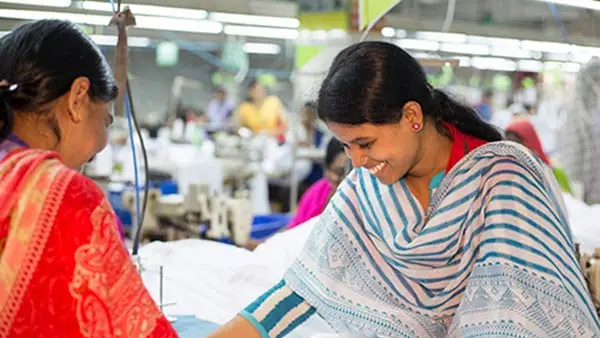
Centered around International Women's Day on March 8th, companies across the country have been focusing on supporting women throughout the month. Nordstrom, a major American supply chain, has outsourced the production of 70% of its original clothing and other products to factories affiliated with Her Project, an organization that supports women's employment and empowerment. This supports women who are forced to work for low wages, intensive labor, discrimination, and harassment in factories. Many other apparel companies, such as J. Crew and American Eagle Outfitters, have also endorsed the project to varying degrees and are working to improve the working conditions of female employees in factories. Fast fashion brand H&M also launched a project on International Women's Day on March 8th to support brands owned by Black women for one year. Partnering with the non-profit organization Buy From a Black Woman, they have announced that they will provide support from various angles over the year, including supporting accelerators for brands owned by Black women and donating a portion of their sales.
In Japan, there are still relatively few businesses run by female entrepreneurs, and it's rare to see companies offering concrete business support during Women's History Month. Empowering women will likely lead to a boom in businesses that leverage strengths that men don't have, and revitalize the market.
Share this article
- Share on Facebook
- Share on X
- Share on LinkedIn



