 跨境独立站开店
What is dead stock? Causes, disadvantages, and ways to reduce it.
This article explains the meaning of dead stock and the causes of dead stock items. By understanding the disadvantages of dead stock and how to reduce it, you can implement efficient inventory management.



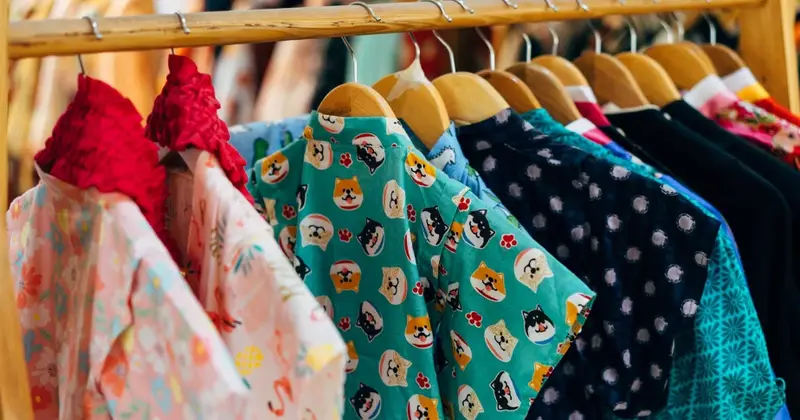



This article explains the meaning of dead stock, the causes of its occurrence, and how to avoid it.
Inventory is an important asset that contributes to sales, but dead stock can become a burden on business operations. This article will explain what dead stock is, what causes it to occur, and how to manage inventory to resolve it.
What is deadstock?
Dead stock refers to inventory that has remained unsold and missed sales opportunities.
This term is commonly used in the apparel industry. For example, if winter coats remain unsold after the season ends, they become dead stock because demand has shifted to spring items, meaning there is no opportunity to sell them.
Advantages of deadstock
Deadstock items that have been stored for a long time can sometimes be re-evaluated as rare or no longer available vintage items, and in such cases, they can be sold at a higher price than their usual retail price.
The impact of dead stock on the retail industry
Dead stock has the following impacts on the entire business:
- It negatively impacts cash flow: Dead stock is difficult to convert into cash, and the funds used for purchasing and manufacturing cannot be recovered. As a result, funds cannot be allocated to initiatives and purchases that should be invested in, reducing the efficiency of capital investment. Furthermore, it leads to the loss of opportunities to generate sales and profits.
- Storage costs are incurred on an ongoing basis: Dead stock occupies warehouse and store space that could be used for other products, increasing the burden of rent, management fees, and other expenses.
- Becoming outdated and losing value: Especially for apparel, seasonal goods, and technology-related products, trends change quickly, and missing the sales window can lead to a mismatch with market demand. As a result, it becomes difficult to sell at the regular price, forcing price reductions or disposal.
- Risks of deterioration and quality degradation over time: Even unused items may develop stains, scratches, or discoloration due to long-term storage. Depending on the material, deterioration may progress, making it difficult to sell the item at all.
- It makes inventory analysis and management decisions more difficult: When dead stock increases, inventory turnover and the accuracy of demand forecasts decrease. As a result, the likelihood of making incorrect purchasing decisions increases.
Causes of dead stock
The main reasons for dead stock are as follows:
- Inadequate inventory management system: If inventory levels and sales status are not accurately tracked, it becomes impossible to determine appropriate order quantities or reordering, resulting in overstocking and unsold inventory.
- Delays in responding to trends and seasonality: Failure to flexibly adapt to changing trends and the passage of seasons will result in unsold inventory.
- Discrepancy between product quality and customer needs: If there are problems with product quality and it doesn't meet the anticipated customer needs, sales will stagnate.
- Lack of market analysis: Without a thorough analysis of market trends, it is impossible to accurately grasp demand.
dead stock cost
Let's take a closer look at the costs incurred by dead stock, assuming a small-scale apparel e-commerce business.
In preparation for winter, we purchased 200 coats at 10,000 yen each, investing a total of 2 million yen. However, by the end of the season, only 100 coats had been sold, leaving the rest as dead stock. In this situation, the business would incur the following costs:
- 1 million yen fixed as inventory: 1 million yen worth of inventory cannot be immediately converted into cash, resulting in a stagnation of funds.
- Storage costs of 160,000 yen: If storage costs are 20,000 yen per month and it takes 8 months to sell everything, a total storage cost of 160,000 yen will be incurred.
- Loss of 250,000 yen due to reduced recovery: If a significant price reduction is implemented to clear inventory, and items are sold for 7,500 yen each, only 750,000 yen will be recovered from a purchase cost of 1,000,000 yen.
How to avoid deadstock
The main ways to avoid deadstock items are as follows:
- Utilize an inventory management system: By establishing a system that allows you to track inventory levels and sales status in real time, you can detect signs of slowing sales or excess inventory early, making it easier to take measures such as price reductions or promotions.
- Start with small batches for new products: It's safer to order new products in small quantities until you can confirm their sales. The unit cost of procurement may be slightly higher, but if this is less than the losses from unsold inventory, it is ultimately a healthier decision.
- Understanding customer needs in advance: We identify the products customers are looking for and their areas of dissatisfaction through surveys, purchase history, inquiries, and other means.
- Select products using data: It is important to base product procurement decisions on industry trends and past sales data, rather than relying on the intuition of the person in charge.
- Establish rules for the timing and quantity of reorders: By setting criteria such as reordering a predetermined quantity when inventory falls to a certain level, you can prevent purchasing decisions from becoming subjective.
How to dispose of dead stock
The main methods for disposing of dead stock are as follows:
- Listing on e-commerce marketplaces: Utilizing sales channels such as eBay can increase the likelihood of cashing in your items.
- Donating to charities: Another option is to donate to charities without expecting anything in return. Depending on the country or region, this may be tax-deductible.
- Offering items for free as a purchase bonus: By using them as a bonus for purchases above a certain amount or as promotional items in campaigns, you can reduce inventory while improving customer satisfaction.
- Offering it as a giveaway: As part of your social media marketing, using it as a prize in a giveaway campaign can help increase brand awareness and attract future customers.
- Bundle sales: Selling popular items together makes it easier to clear out inventory that doesn't sell well individually.
- Selling through consignment stores or outlets: Selling through consignment stores or outlets allows you to reduce inventory without damaging the brand's value.
- Hold a clearance sale: By lowering prices for each SKU and replacing inventory early, you can reduce storage costs and management burdens.
If left unattended, dead stock can lead to costs and lost opportunities, negatively impacting your business. Identify the causes, review your inventory management and purchasing decisions, and prevent its occurrence. Even with existing inventory, you can minimize its impact on your business by devising sales methods and utilization strategies. Regularly check your company's inventory status and aim for sound inventory management.
FAQ
What is dead stock?
Dead stock refers to unsold goods that have been purchased but have not been sold for a long period of time.
What's the Japanese equivalent of "dead stock"?
In Japanese, dead stock is generally referred to as "defective inventory" or "stagnant inventory."
How do you deal with deadstock?
Deadstock items can be used in the following ways:
- Listing on an e-commerce marketplace
- Donations to charity organizations
- Offered free of charge as a purchase bonus.
- Offered as a giveaway
- Bundle sales
- Sold at consignment stores and outlets.
- Clearance sale in progress
What are the differences between deadstock, vintage, and old stock?
Each item has a different meaning in terms of its condition. The details are as follows:
- Dead stock refers to inventory that has missed sales opportunities and is a burden for businesses.
- Vintage refers to items that have become rarer and more valuable over time, and are highly valued in the market. Sometimes, items that were originally deadstock are later treated as vintage.
- Outdated stock: This refers to inventory of older models due to the introduction of new models or specification changes. It's not necessarily unsellable; it may be sold through price adjustments or other means.
Share this article
- Share on Facebook
- Share on X
- Share on LinkedIn



