跨境独立站开店
Shopify Online Store 2.0: Its Significance for Developers
This article provides a comprehensive explanation of the new Shopify Online Store 2.0. We will also explain the requirements for updating your current themes and apps to meet the Online Store 2.0 standards.

1. Upgraded theme architecture
We've upgraded our theme architecture for online stores, providing merchants with more flexible and easier customization options. This opens up new opportunities for developers to create themes and integrations that merchants can customize to their specific needs.
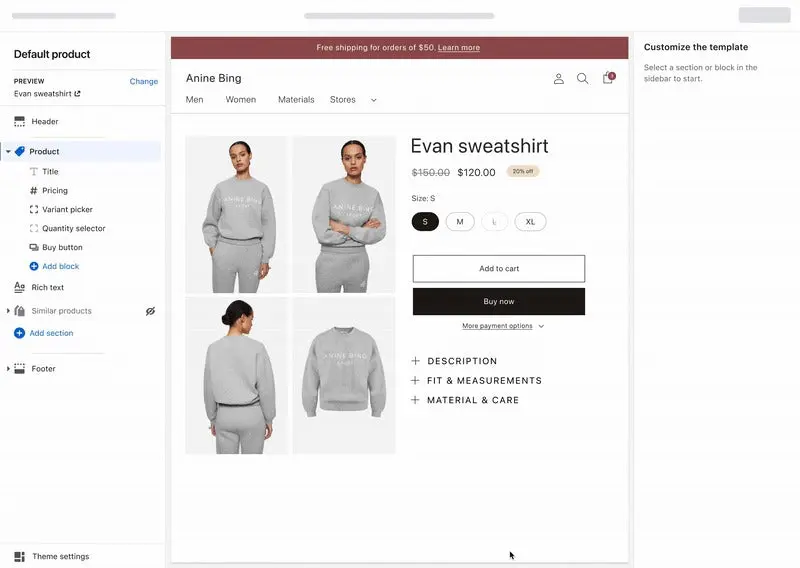
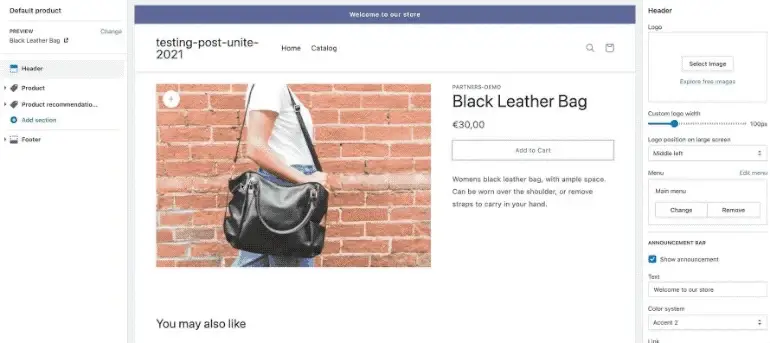
Sections on every page
Until now, merchants had limited ways to represent their businesses on Shopify because the flexibility of sections was limited to the homepage. Achieving the same effect on other pages required code editing, complex workarounds using blocks, or custom apps.
The structure of each page section
These changes are achieved by introducing a new approach to how the storefront renders templates. Each page type is rendered using a JSON template file, which lists the sections of each page and stores configuration data for sections added or edited by the merchant. A store can have multiple templates mapping various products, collection pages, custom pages, blog posts, and more, making it easy for merchants to create diverse products, collections, and other pages within the same store.
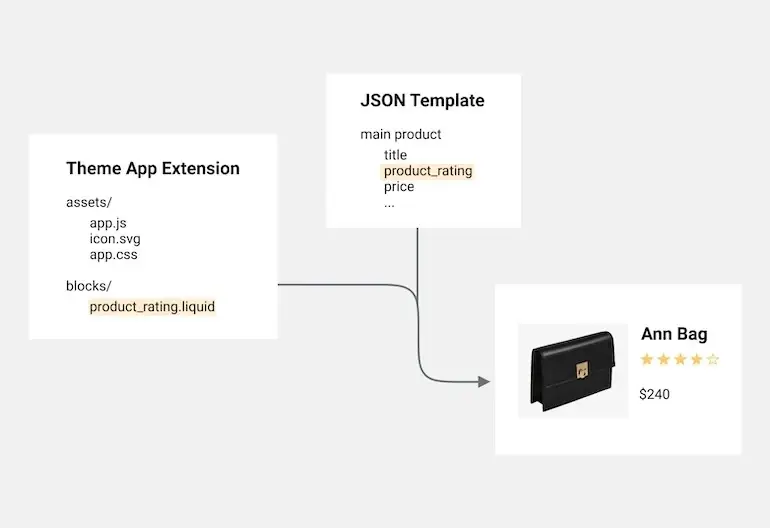
Theme app extensions using app blocks
The new theme architecture will change how storefronts and apps are integrated. Currently, there is no structured, complete solution that makes it easy to integrate apps with themes. Developers have to build integration logic and host assets for each existing theme, making it difficult to build features that always work across all themes and run fast anywhere in the world.