跨境独立站开店
What is Customer Lifetime Value (CLV)? Calculation Methods and Strategies to Improve It
This article explains what Customer Lifetime Value (CLV) is and what measures can be taken to improve it.
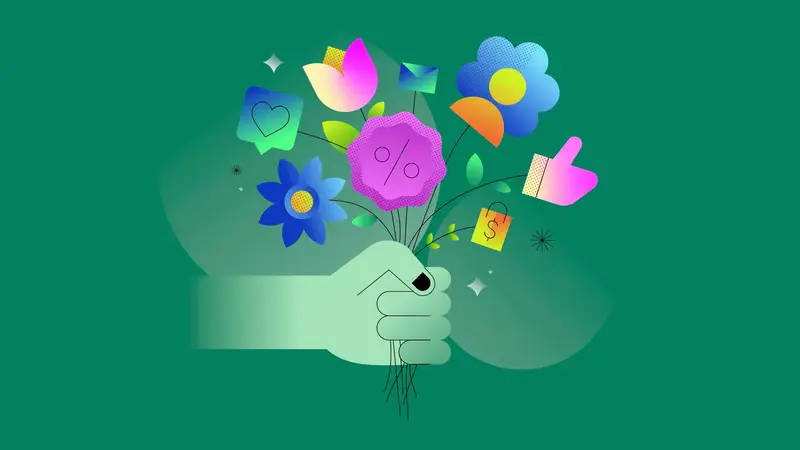
This section provides an overview of CLV, including its basic structure, calculation methods, and related strategies.
In recent years, the cost of acquiring new customers has risen due to increased competition resulting from market maturation. As a result, many companies are increasing their advertising and promotional spending to acquire customers, but it is not easy to achieve sustained growth solely through acquiring new customers.
One approach gaining attention is to strengthen relationships with existing customers, leading to long-term sales growth and improved return on investment (ROI). By increasing ongoing customer engagement and encouraging repeat purchases, upselling, and cross-selling, a more stable revenue base can be expected.
This article introduces CLV (Customer Lifetime Value), an indicator used to evaluate long-term relationships with customers, including its calculation method, importance, and eight specific measures to improve CLV.
What is CLV?
CLV (Customer Value) is a metric that represents the total profit a single customer generates for a company over the entire period from when they start using the company's products or services until the transaction ends. It is an important concept for measuring the value created through long-term relationships with customers, rather than just a one-time sale.
For example, suppose a customer makes a 20,000 yen purchase on their first purchase. If they continue to like the product or service and make purchases four times a year for five years, averaging 20,000 yen each time, the total value of that customer's revenue (CLV) would be 400,000 yen. This ability to understand a customer's long-term value, which cannot be judged solely by the amount of a single purchase, is a major advantage of using CLV.
Why is CLV important?
- This will lead to future revenue forecasts and a stable revenue base.
- Leads to improved customer loyalty
- Optimize your marketing strategy
Understanding Customer Life Value (CLV) makes it easier to more accurately predict how much profit a customer will bring in the future. Knowing the percentage of high-value customers and their retention rates improves the accuracy of sales forecasts and contributes to building a stable revenue base, making it a crucial indicator when developing medium- to long-term business strategies.
Building lasting customer relationships is essential to increasing customer lifetime value (CLV). Therefore, companies focus on improving the quality of their products and services and enhancing the customer experience. As a result, customer satisfaction (CS) and brand loyalty improve, leading to increased repeat purchases and the acquisition of new customers through word-of-mouth.
By analyzing customer lifetime value (CLV), you can understand the characteristics of customer segments that generate high profits in the long term. This allows you to prioritize allocating advertising and promotional expenses to these high-profit segments, thereby improving the cost-effectiveness of your marketing efforts.
How to calculate CLV
There are various methods for calculating CLV, but we will introduce the basic formula and how to calculate each item.
CLV = Average Purchase Price × Average Purchase Frequency × Average Customer Lifetime
- Average purchase price: Average sales amount per purchase (total sales ÷ total number of purchases)
- Average purchase frequency: The average number of times a customer makes a purchase within a certain period (total number of purchases ÷ total number of customers)
- Average customer lifespan: The average period of time a customer continues to use a company's products or services.
For example, if the average purchase price is 5,000 yen, the average purchase frequency is 4 times a year, and the average customer lifetime is 3 years, the CLV (Customer Lifetime Value) would be 60,000 yen (5,000 yen x 4 times x 3 years).
Therefore, to improve CLV (Customer Lifetime Value), three elements are key: "increasing the average purchase price," "increasing the frequency of purchases," and "maintaining long-term relationships with customers."
8 measures to improve CLV
- Providing high-quality customer service
- Collect and analyze customer feedback.
- Implement personalized marketing
- Implement a loyalty program.
- Strengthen upselling and cross-selling
- Leveraging a subscription model
- Form a community and offer exclusive experiences
- Implement customer segmentation.
1. Provide high-quality customer service.
Prompt and courteous customer support is essential for building trust. Exceeding expectations increases customer satisfaction, builds confidence, and leads to repeat purchases. Utilizing chat tools like Shopify Inbox allows you to provide consistent support across multiple channels, including your online store, social media, and email. Furthermore, the quality of customer service significantly impacts your brand image, leading to long-term customer retention and positive word-of-mouth.
2. Collect and analyze customer feedback.
Customer feedback is a valuable source of information for improving products and services. Collecting customer opinions through surveys and review functions and incorporating the results into improvements leads to increased customer satisfaction. Furthermore, it allows for early identification of changes in customer needs, making it easier to respond flexibly to changes in the market environment.
3. Implement personalized marketing.
By leveraging customer data, we implement marketing strategies tailored to each individual's interests and behavior. We expect to see increased purchase rates by suggesting products based on past purchase history and notifying customers when items of interest are back in stock. Providing information that meets each customer's needs also enhances brand trust. This type of personalized marketing not only increases sales but also improves the customer experience and satisfaction.
4. Implement a loyalty program.
Introducing special services such as point systems, membership ranking systems, and exclusive benefits can encourage continued customer use and foster long-term relationships between companies and customers. Such loyalty programs make customers feel the benefits of continuing their purchases, effectively preventing them from switching to competitors and deepening their loyalty to the company and brand. Apps like Smile Points Loyalty Program make it relatively easy to implement point rewards and referral programs. This motivates continued use, preventing customer churn and increasing purchase frequency.
5. Strengthen upselling and cross-selling
Upselling and cross-selling are typical strategies for increasing the average purchase price. By suggesting higher-priced items than the product the customer is considering purchasing, or by suggesting related products together, the average purchase price can be increased. By making suggestions that meet the customer's needs, it is possible to increase the purchase amount without compromising customer satisfaction. Because it leads to an increase in the average transaction value, it is one of the strategies that can easily increase sales with relatively low costs.
6. Leverage a subscription model
For consumables and products that require regular purchases, implementing a subscription model is effective. Regular purchases ensure continuous revenue, leading to stable profits. Furthermore, it reduces the hassle of purchasing for customers, improving convenience. Using apps like Shopify Subscriptions makes setting up subscription plans easy.
7. Build a community and offer exclusive experiences.
Providing a platform for customers to interact with each other through member-only communities on social media and apps is also effective. Customers will begin to see themselves not merely as buyers, but as members of the brand. Furthermore, offering exclusive events and early access to products for valued customers can increase their attachment to the brand and sense of belonging. Customers who have become fans can be expected to not only make repeat purchases but also to share information through social media and word of mouth.
8. Conduct customer segmentation.
Instead of using the same approach for all customers, categorize them into groups based on factors such as purchase frequency, purchase amount, and customer lifetime value (CLV), and implement strategies tailored to each group's characteristics. For example, you could offer special offers to valuable customers and distribute coupons to encourage repeat purchases from inactive customers who haven't made a purchase in a long time. Implementing customer segmentation can improve marketing effectiveness and contribute to the overall cost-effectiveness of your campaigns by allowing for the efficient use of limited budgets.
Customer Value (CLV) is a key metric for visualizing the long-term value that customers bring to a company. With the cost of acquiring new customers rising, strengthening relationships with existing customers and encouraging repeat purchases has become more important than ever for many businesses. Understanding CLV allows for future revenue forecasting and optimization of marketing strategies, as well as improving customer satisfaction and loyalty.
Furthermore, you can increase your Customer Life Value (CLV) through improved customer service, personalized marketing strategies, and the implementation of loyalty programs. We encourage you to understand your company's CLV and work on building long-term relationships with your customers.
Share this article
- Share on Facebook
- Share on X
- Share on LinkedIn