 跨境独立站开店
What is a composable architecture? An explanation of the system configuration required for large-scale e-commerce.
This article introduces the concept of composable architecture necessary for large-scale e-commerce and provides examples of configurations using Shopify that can be applied to a wide range of industries.

What is a composable architecture?
Composable architecture is a concept that builds an optimal system by combining multiple functions and services, rather than consolidating all necessary functions into one large system. Its key feature is the integration of various functions in a way that facilitates collaboration, such as through APIs, rather than simply adding more tools.
Shopify: An e-commerce platform using a composable architecture.
Shopify provides an e-commerce platform based on the concept of composable architecture. While it includes essential commerce functions such as product management, shopping cart, checkout, and order management, it allows you to build a system configuration that suits your company using apps, APIs, webhooks, external services, and developer tools.
Case study of a large-scale e-commerce architecture using Shopify
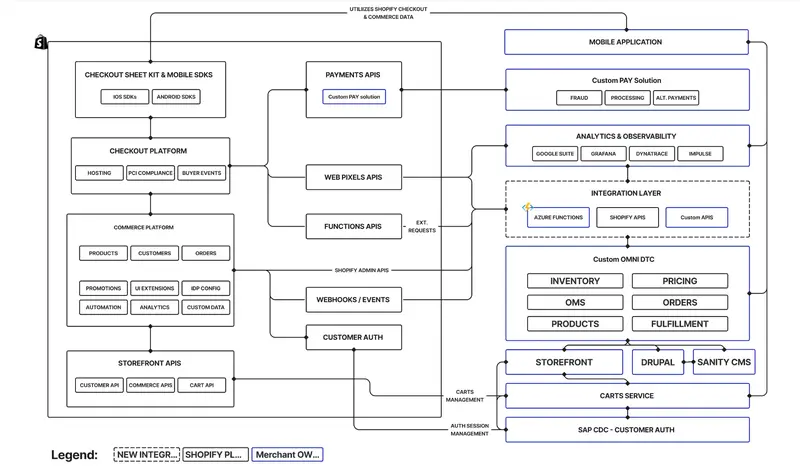
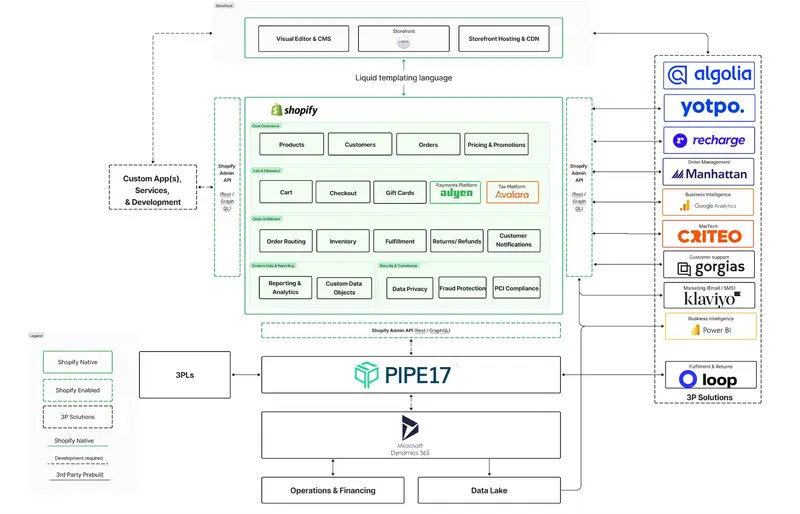
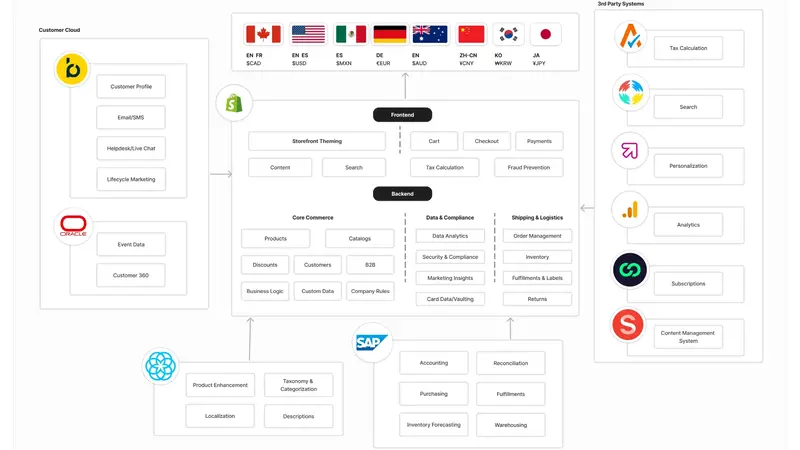
The diagram below shows a typical configuration of a composable architecture used in enterprise companies. Shopify handles core commerce functions such as product management, shopping cart, checkout, and order management, and flexibly integrates with peripheral systems such as ERP, CRM, PIM, logistics, analytics, and marketing.
Examples from major food companies
Large food companies have a wide range of products and sales channels, and order volumes can fluctuate significantly depending on campaigns and seasonal demand. Furthermore, food sales require consideration of expiration dates and storage conditions, and the accuracy of inventory management and shipping timing directly impacts the customer experience. Therefore, it is crucial to centrally manage orders, inventory, and customer information in near real-time.



