跨境独立站开店
The design philosophy of the Universal Commerce Protocol (UCP)
Commerce is the oldest form of transaction humankind has ever engaged in, and it's ubiquitous. However, it's never a single, uniform process. For over 20 years, Shopify has learned about the complexities of commerce through billions of transactions and millions of merchants, and we continue to approach its depths with humility.
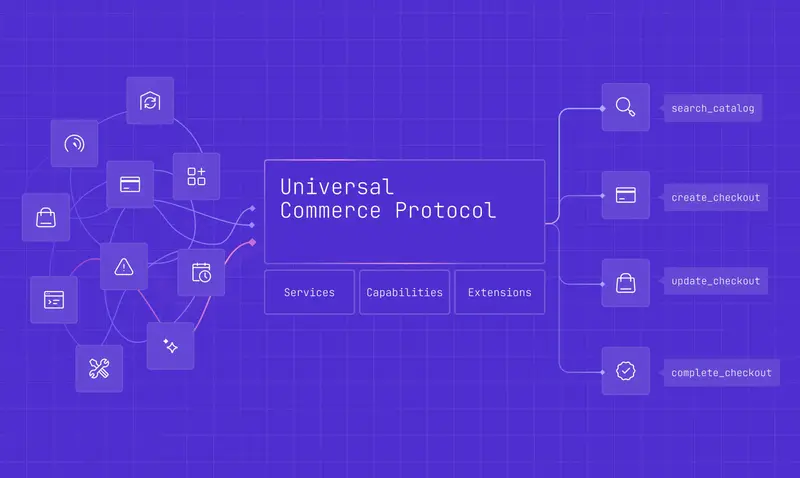
Features and Expansions
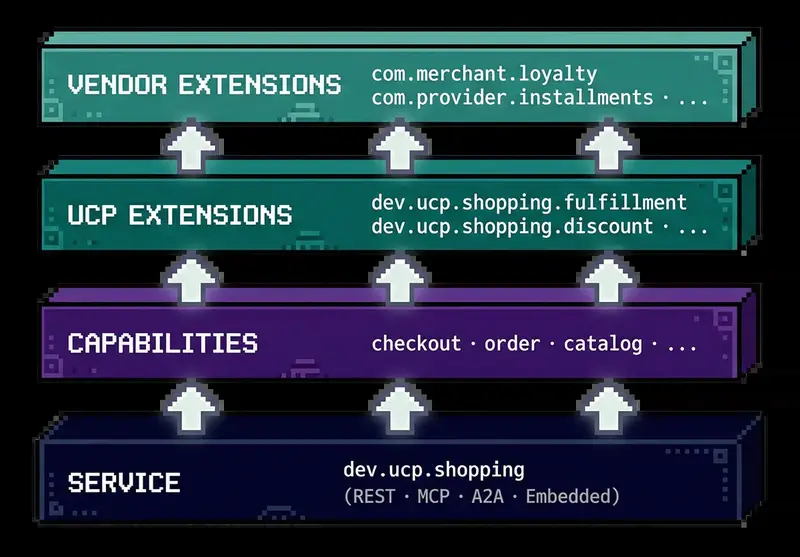
Monolithic protocols ultimately become overwhelmed by complexity. They lack flexibility to adapt to change and are not fast enough to keep up with new requirements. On the other hand, properly layered protocols survive long by clearly separating roles, organizing APIs, and achieving composability (the ability to combine and use functions). TCP/IP is a prime example. UCP also applies this design philosophy to commerce, dividing roles into the following layers:
Open marketplace for features; no approval committee required.
Both the merchant and the agent publish profiles declaring what they support. Discovery is the process of obtaining these profiles. Negotiation calculates their common ground.
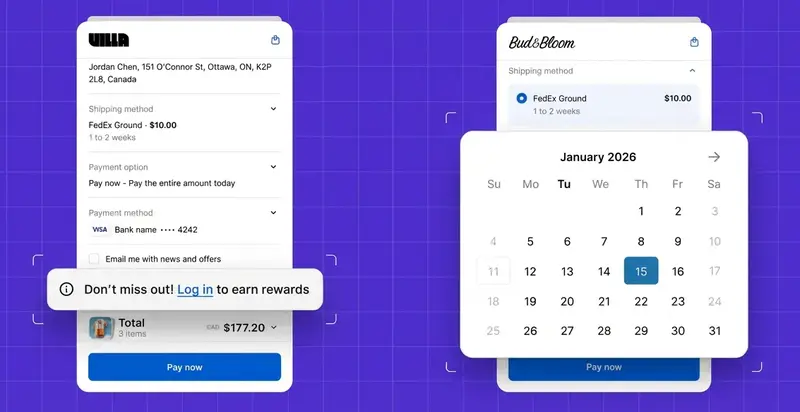
Specific example: Extension of loyalty programs
Let's look at com.loyaltyprovider.points, which is included in the merchant profile, as an example. This is an extension that the merchant has installed from the loyalty provider.
Approval-free system
So how did loyaltyprovider gain the authority to define com.loyaltyprovider.points? In fact, no approval application was required. There is no central registry or approval committee.